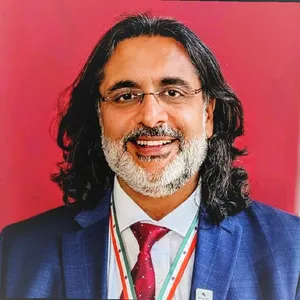
Government Doesn’t Have to Be Slow and Risk-Averse — Ramsey County, MN
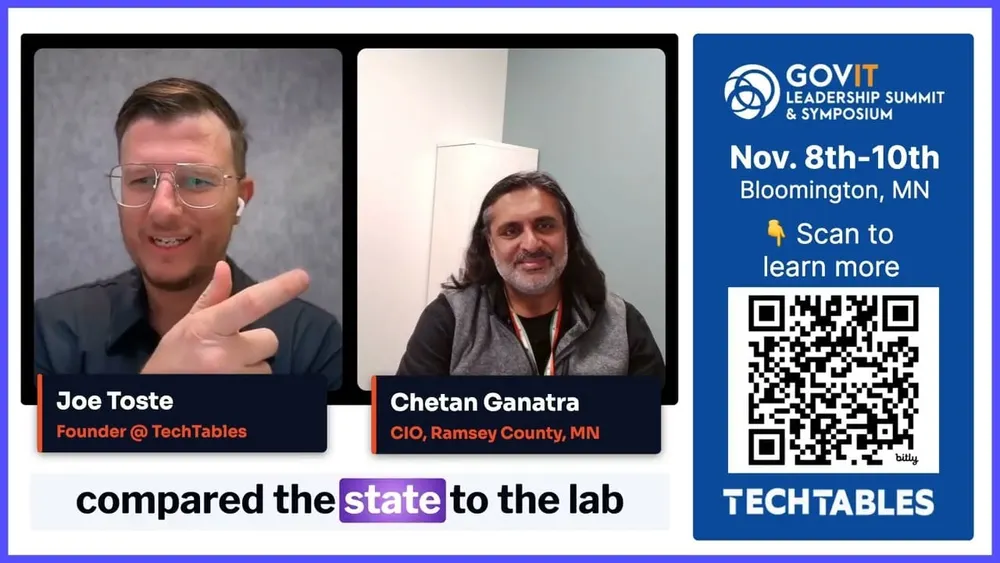
Ramsey County CIO Chetan Ganatra joins TechTables to discuss breaking down IT silos, shifting to service-oriented teams, and proving that public sector IT can be fast, accountable, and human-centered.
 Joe Toste
Santa Barbara, CA
Player
Show notes
For the past decade, Ramsey County’s CIO, Chetan Ganatra, has been trying to prove that government doesn’t have to be slow and risk-averse, first at the state and now at the county.
It started with a 2017 Star Tribune series on abuse complaints in senior care and his parents living alone in India. When he arrived at the county four and a half years ago, at least 7 to 10 escalations hit his inbox every day. The systems are about the same today. The inbox isn’t.
I talked with Chetan about all of it. And yes, we also get into the first team, why the state felt like a vaccine lab, what he gets out of the GOVIT Leadership Summit & Symposium, and more!
Key takeaways
- Public sector IT should prioritize human impact and resident needs over technology for its own sake.
- County-level IT provides direct frontline delivery that complements state-level policy and system design.
- Establishing a first-team culture breaks down operational silos and fosters cross-departmental collaboration.
- True accountability focuses on supportive problem-solving rather than pointing fingers or assigning blame.
- Psychological safety gives teams the confidence to innovate and learn without fear of failure.
- Ticket counts only tell part of the story; true success is measured by user satisfaction and service delivery.
00:00:00 Government doesn't have to be slow
00:05:20 Why Chetan joined government
00:09:30 State lab vs. county front line
00:12:15 Breaking down IT silos
00:13:30 Minnesotans and hard conversations
00:15:20 Service teams, not tech teams
00:16:20 Measuring the culture shift
00:20:20 Accountability isn’t a dirty word
00:21:10 Air cover and psychological safety
00:22:50 Numbers only tell part of the story
00:24:30 Why go to GOVIT?
WEBVTT
00:00:00.000 --> 00:00:02.000
Welcome to the Public Sector Show by TechTables.
00:00:02.000 --> 00:00:04.000
Super excited to have you on.
00:00:04.000 --> 00:00:11.000
Technically twice, because this morning we tried, it didn't work out, and now I'm in my co-working spot, down maybe a mile down the street.
00:00:11.000 --> 00:00:14.000
But for those who don't know you, give us a quick intro.
00:00:14.000 --> 00:00:15.000
Sure, Joe.
00:00:15.000 --> 00:00:18.000
First of all, thank you so much for having me on your podcast.
00:00:18.000 --> 00:00:25.000
If I had to sum up my journey as a leader, I'm a technologist who basically fell in love with public service, right?
00:00:25.000 --> 00:00:27.000
The human side of public service.
00:00:27.000 --> 00:00:36.000
Technology just by itself is technology, but, where I get my joy is where it connects to the human side, where it makes an impact to people's lives.
00:00:36.000 --> 00:00:42.000
I saw firsthand how integrated some of our systems were, and I'm like, Yeah, I can make them better.
00:00:42.000 --> 00:00:46.000
That's what brought me to public service and allowed me to be a technologist at the same time.
00:00:46.000 --> 00:01:06.000
Over past decade, from state-level human services, where I was the deputy chief business technology officer at Department of Human Services for state of Minnesota, to here in the front lines as the CIO for Ramsey County, my focus has always been on proving that government doesn't have to be slow and risk-averse.
00:01:06.000 --> 00:01:10.000
We don't have to keep doing things because we've always done it that way.
00:01:10.000 --> 00:01:21.000
So it's more about changing the culture, treating IT as a partner rather than an afterthought, because IT is no more just about buying software or computers.
00:01:21.000 --> 00:01:24.000
Everything is run by technology.
00:01:24.000 --> 00:01:28.000
As I said, if you sum me up, I'm a technologist who is in love with public service.
00:01:28.000 --> 00:01:37.000
I have had, great experiences with private industry too, and I've been able to bring a lot of lessons from my private industry days to public service.
00:01:37.000 --> 00:01:53.000
By education, I'm an electrical electronics engineer who probably spent a lot of time being a purchase officer for a big chiller and boiler manufacturer in India before I got seduced by the technology and went in, and I've never looked back since then.
00:01:53.000 --> 00:01:54.000
That's great.
00:01:54.000 --> 00:01:58.000
Okay, so you gotta give us some context because people all around the country are gonna listen to this.
00:01:58.000 --> 00:02:00.000
So Ramsey County is in Minnesota.
00:02:00.000 --> 00:02:01.000
Oh, yes.
00:02:01.000 --> 00:02:04.000
Where in Minnesota is this? Where is Ramsey County?
00:02:04.000 --> 00:02:06.000
Kind of give us the geography.
00:02:06.000 --> 00:02:11.000
Ramsey County is the second most populous county in Minnesota after Hennepin County.
00:02:11.000 --> 00:02:17.000
We might not be the largest in terms of area, but we are way more densely populated.
00:02:17.000 --> 00:02:22.000
We have a population of about half a million people, four- four hundred and fifty to half a million people.
00:02:22.000 --> 00:02:32.000
And this is an extremely diverse group of residents that we have, lot of immigrants, lot of people of different, you know, backgrounds and races and everything.
00:02:32.000 --> 00:02:40.000
So Ramsey County is a melting pot of lot of cultures and, subsequently it leads to different kinds of needs in our community.
00:02:40.000 --> 00:02:44.000
And I'm sorry, I, I expect everyone knows Ramsey County because that's my world.
00:02:44.000 --> 00:02:46.000
That's where my heart is.
00:02:46.000 --> 00:02:54.000
And when I was, talking to Mary, Mary Wynne at, at Fusion, she's like, We'd love to have the CIO for Ramsey County.
00:02:54.000 --> 00:02:57.000
And I was like, same same thing, like, where is that?
00:02:57.000 --> 00:02:59.000
So you must have heard City of Saint Paul.
00:02:59.000 --> 00:03:03.000
The capital of Minnesota resides in Ramsey County.
00:03:03.000 --> 00:03:09.000
Capital complex, the governor's offices and everything is within this Ramsey County.
00:03:09.000 --> 00:03:10.000
I love it.
00:03:10.000 --> 00:03:20.000
And I think- So having done so many of the podcast episodes, I love to take the time to unpack where people are at, because it really helps lay, and you nailed it, the services.
00:03:20.000 --> 00:03:27.000
So for example, in Clark County in Nevada so Bob Leek's been on the show a couple times.
00:03:27.000 --> 00:03:32.000
I think he said there's something like, you know, twelve or thirteen Clark Counties in the United States, but this one in Nevada.
00:03:32.000 --> 00:03:37.000
He was talking about, I think, Tagalog is the number two most spoken language.
00:03:37.000 --> 00:03:38.000
So there's- It's the same thing.
00:03:38.000 --> 00:03:42.000
There's just a melting pot in Las V- in Las Vegas, where Clark County is.
00:03:42.000 --> 00:03:46.000
And so it helps shape maybe different services need to happen.
00:03:46.000 --> 00:03:47.000
No, I appreciate that.
00:03:47.000 --> 00:03:53.000
And, I- you know, talking about myself is the hardest thing you can ask me to do, so I always keep my introductions brief.
00:03:53.000 --> 00:03:58.000
And as a part of that, I forget to introduce my place of work and my county.
00:03:58.000 --> 00:04:17.000
But, this is why this, funny thing that happens to us is we have a tough time trying to use, AI-based, translation tools, because the main languages we need are Hmong and Karen and such, and none of the translation tools have really mastered that yet, all the big players and small players.
00:04:17.000 --> 00:04:24.000
We have still not found something that will, take care of our primary languages that our residents use as an automated translation.
00:04:24.000 --> 00:04:31.000
That sounds like an opportunity for a startup to build something and then sell it to him.
00:04:31.000 --> 00:04:33.000
This is the entrepreneur in me.
00:04:33.000 --> 00:04:35.000
I see a problem, can't help it.
00:04:35.000 --> 00:04:37.000
I wanna solve it, yeah.
00:04:37.000 --> 00:04:41.000
That's, I think that's kinda what makes a lot of the, the best entrepreneurs or leaders.
00:04:41.000 --> 00:04:44.000
They're looking for problems, how to solve it.
00:04:44.000 --> 00:04:45.000
That's for a different episode.
00:04:45.000 --> 00:04:46.000
So jump in.
00:04:46.000 --> 00:04:58.000
You had this great story when we met, for our intro call around senior living facilities, a lot of paper-based files, your own parents, living in India.
00:04:58.000 --> 00:04:59.000
Kinda unpack that for us.
00:04:59.000 --> 00:05:00.000
Oh, definitely.
00:05:00.000 --> 00:05:01.000
Thank you for that.
00:05:01.000 --> 00:05:06.000
That story I told you about was the reason why I am in public sector.
00:05:06.000 --> 00:05:07.000
So, to go back, right?
00:05:07.000 --> 00:05:08.000
I'm an immigrant here.
00:05:08.000 --> 00:05:10.000
I'm a citizen now.
00:05:10.000 --> 00:05:18.000
I'm an immigrant, and I always wanted to do something for this place that let me call it home, for the community that welcomed me into their fold, right?
00:05:18.000 --> 00:05:21.000
But I also have to pay my bills.
00:05:21.000 --> 00:05:24.000
At the same time, I still have to raise a family.
00:05:24.000 --> 00:05:30.000
And, I think around 2017, around November, December of 2017, I was reading an article.
00:05:30.000 --> 00:05:38.000
I think Star Tribune did a five-part investigative series, which was titled, Left to Suffer.
00:05:38.000 --> 00:05:52.000
And the crux of that was, in the senior living facilities, there are twenty-five thousand complaints of abuse or mistreatment received through the year, and the state only had been able to investigate three percent of those.
00:05:52.000 --> 00:06:04.000
So to translate it for you, imagine, how frustrating it is when you have to wait for ten minutes when you call your cell phone operator and they say, Please wait, you are in the queue, and we'll get back to you.
00:06:04.000 --> 00:06:08.000
This, when you translate it to the senior living, complaint stack, right?
00:06:08.000 --> 00:06:16.000
That meant that many of the people who filed complaints did not hear back from an investigator for almost a year or more.
00:06:16.000 --> 00:06:19.000
Now, these are the population of our society.
00:06:19.000 --> 00:06:25.000
These are the people who built this country or who built the past on which we rest today, right?
00:06:25.000 --> 00:06:28.000
And it just struck a chord in my heart.
00:06:28.000 --> 00:06:32.000
At the same time, my parents were living by themselves in India.
00:06:32.000 --> 00:06:40.000
And being a big believer of karm, as we call it, and in Western world, we call it karma, what goes around comes around.
00:06:40.000 --> 00:06:42.000
I was like, I need to do something.
00:06:42.000 --> 00:06:53.000
And this, this story that I read gave me the idea that, yes, I can still do my technology work, but serve the residents, serve this community that I really wanted to do something for.
00:06:53.000 --> 00:07:00.000
And that's when I started looking for a job in government, and I was fortunate enough to get to work for Department of Human Services.
00:07:00.000 --> 00:07:06.000
And I would like to think I've made some changes, some impact, to the systems that has made life easier.
00:07:06.000 --> 00:07:17.000
The fact of the matter was why only 3% of the complaints were addressed in a year was because their whole system was paper-based.
00:07:17.000 --> 00:07:32.000
And in that day and age where we are moving around with iPhones and Duos and, Android phones, it just didn't seem right that people had to suffer and not get the help that they deserve because we could not modernize our systems.
00:07:32.000 --> 00:07:35.000
And that's where I saw a place for myself.
00:07:35.000 --> 00:07:45.000
That's what brought me to this because I'm like, I hope someone is doing the same thing, or someone is worried about my parents living in India on their own.
00:07:45.000 --> 00:07:47.000
I can help the senior population here.
00:07:47.000 --> 00:07:52.000
So that's really... Okay, so I love-- This is how my brain works in real time.
00:07:52.000 --> 00:07:58.000
This is actually why I love doing the podcast virtual too because I can access the internet.
00:07:58.000 --> 00:08:05.000
The story you just told, did you ever read this book called Power to the Public: The Promise of Public Sector Interest Technology?
00:08:05.000 --> 00:08:07.000
I do not believe I've read it.
00:08:07.000 --> 00:08:08.000
Okay.
00:08:08.000 --> 00:08:23.000
They have a story just like this, and it had to do in like a, with a waiting room, and they were giving like single moms or something like this know, it was like, 96 questions, and it was taking hours to get like delivery services and stuff like that.
00:08:23.000 --> 00:08:26.000
And, they started to be like how can we like help cut this down?
00:08:26.000 --> 00:08:28.000
And they started going through the questions.
00:08:28.000 --> 00:08:29.000
H this is 20 pages of stuff.
00:08:29.000 --> 00:08:32.000
And they're like we don't need to ask- all this all these questions.
00:08:32.000 --> 00:08:34.000
And and I'm blanking on the detail.
00:08:34.000 --> 00:08:37.000
I think I read this book several years ago, but, I'll look it up.
00:08:37.000 --> 00:08:38.000
I'll look it up.
00:08:38.000 --> 00:08:40.000
Exactly what you were, and I just put it down on my notes.
00:08:40.000 --> 00:08:41.000
I might have to go look it up.
00:08:41.000 --> 00:08:49.000
But exactly what you were just saying it's technology can have such a great impact, positive impact but then it brings in all these other things that we gotta get right?
00:08:49.000 --> 00:08:56.000
Change management, all this other governance, all this stuff making sure we're actually solving for the real problem, right?
00:08:56.000 --> 00:08:57.000
Yes.
00:08:57.000 --> 00:08:59.000
And we're not even trying to build rockets here.
00:08:59.000 --> 00:09:00.000
Yeah.
00:09:00.000 --> 00:09:08.000
This is, I don't need to be at the bleeding edge of the technology always, but this is, you know, basic need that should be fulfilled in this day and age.
00:09:08.000 --> 00:09:09.000
Totally.
00:09:09.000 --> 00:09:10.000
100%.
00:09:10.000 --> 00:09:11.000
Yeah, I love this.
00:09:11.000 --> 00:09:12.000
Okay.
00:09:12.000 --> 00:09:16.000
So you gotta- You talked about being at DHS.
00:09:16.000 --> 00:09:22.000
You had this quote, that you said to me that you compared the state to the lab developing the vaccine- Oh, yeah.
00:09:22.000 --> 00:09:25.000
and the county to the frontline administering it.
00:09:25.000 --> 00:09:27.000
Kinda walk it, walk us through that.
00:09:27.000 --> 00:09:28.000
Sure.
00:09:28.000 --> 00:09:45.000
So, people always ask me, What is it like coming from state, State of Minnesota, where I had a team of six hundred and fifty people, a budget in excess of two hundred million dollars, to a county where my team is probably a hundred people and, our budget is maybe one-tenth of that?
00:09:45.000 --> 00:09:48.000
but still, what is that experience like?
00:09:48.000 --> 00:09:57.000
So the easiest way I've found to explain to people is Minnesota is a state-managed and county-administered human services program state, right?
00:09:57.000 --> 00:10:00.000
And, I was at Human Services Agency.
00:10:00.000 --> 00:10:07.000
So it felt when I was working at State, it was more like I was developing vaccine for COVID in a lab.
00:10:07.000 --> 00:10:12.000
I was the one who was creating that vaccine, but I did not see the front lines.
00:10:12.000 --> 00:10:15.000
I did not see the patients who needed help.
00:10:15.000 --> 00:10:21.000
And coming to the county allowed me to experience that frontline worker's perspective.
00:10:21.000 --> 00:10:23.000
So when you're at State, it makes sense, Oh, this is great.
00:10:23.000 --> 00:10:25.000
This is how it should work.
00:10:25.000 --> 00:10:36.000
But coming to the county gave me that appreciation for what counties have to do to deliver the services that our systems manage for them in the back end at State.
00:10:36.000 --> 00:10:49.000
So I always compare it to, working at State was more like working in the lab, developing the vaccine, and working at the county is more like being that frontline worker, administering that vaccine to the people who need it.
00:10:49.000 --> 00:10:50.000
Yeah, that's great.
00:10:50.000 --> 00:10:55.000
I have a, a soft spot for local government kind of education.
00:10:55.000 --> 00:10:59.000
Look, I even have TechTables CIO community coffee mugs.
00:10:59.000 --> 00:10:59.000
What?
00:10:59.000 --> 00:11:00.000
Oh, wow.
00:11:00.000 --> 00:11:01.000
Oh, look at that.
00:11:01.000 --> 00:11:01.000
I know.
00:11:01.000 --> 00:11:02.000
You were like, Hey, I want one of those.
00:11:02.000 --> 00:11:04.000
I was about to say, bring one to November.
00:11:04.000 --> 00:11:06.000
We, we might be out, but I may have to mail you one.
00:11:06.000 --> 00:11:07.000
I might mail you one.
00:11:07.000 --> 00:11:08.000
You might have to give me your address.
00:11:08.000 --> 00:11:12.000
So, so I, you know, I talked about this before, but I so I coach high school basketball, same thing.
00:11:12.000 --> 00:11:21.000
Like I love being on, call it the front lines in this case on the court, with the, with the kids, with the players having that impact.
00:11:21.000 --> 00:11:29.000
Not that behind the scenes, on the state side isn't important, but there's something just special about being on the court or being, being in the game.
00:11:29.000 --> 00:11:38.000
So you arrived, I think you said it was four years ago, and the leadership team was siloed, and you talked about turning it into a first team.
00:11:38.000 --> 00:11:42.000
Tell us more about the leadership philosophy and building the team.
00:11:42.000 --> 00:11:43.000
How, how much time do you have?
00:11:43.000 --> 00:11:52.000
But no, the fun part is, right, as a part of this job, of course, I grew up as a app developer, and I've done all sorts of, technology jobs.
00:11:52.000 --> 00:11:59.000
But where I see the real value is when I bring teams together to deliver what the residents need.
00:11:59.000 --> 00:12:07.000
And when I came in here first, for whatever be the reason, the teams were set up in a way, and some prior leaderships might have, preferred that way.
00:12:07.000 --> 00:12:09.000
The teams were pretty siloed.
00:12:09.000 --> 00:12:13.000
The tickets were being, you know, bounced over the wall from one team to another.
00:12:13.000 --> 00:12:17.000
Probably sometimes right hand didn't know what the left hand was doing.
00:12:17.000 --> 00:12:30.000
And that when you don't talk, when you don't see each other as a human being, and when you just look at, Oh, you're a network person, I'm infrastructure person, he's security person, she is a app dev person, that's what it remains.
00:12:30.000 --> 00:12:36.000
First thing I had to do was, even from the staff, I heard that, My leaders don't agree on the same thing.
00:12:36.000 --> 00:12:38.000
How do you expect us to work together?
00:12:38.000 --> 00:12:53.000
So my whole idea was this team has to work together, and that's where that concept of first team, I had read it somewhere in some Harvard Business review article, and I'm not great at recalling exact articles, but the ideas stay with me.
00:12:53.000 --> 00:12:58.000
And I'm like this first team concept is that this is the team that you rely on.
00:12:58.000 --> 00:13:11.000
This is the team that you reach out to, that you're comfortable to reach out to, and you know they will stand by you when you need some help or when you are suffering, whether it's in their area, which whether it's within their technology or not.
00:13:11.000 --> 00:13:17.000
So I brought in a outside facilitator, and I think the biggest thing, we are in Minnesota, right?
00:13:17.000 --> 00:13:21.000
We are a little passive-aggressive and, we don't always like to have hard conversations.
00:13:21.000 --> 00:13:27.000
You wanna make a Minnesotan uncomfortable, you start having a tough conversation or hard conversation.
00:13:27.000 --> 00:13:33.000
So that was the first thing I had to do, was bring my leadership team together, and I had to show my vulnerability.
00:13:33.000 --> 00:13:36.000
I had to share my experiences, talk to them.
00:13:36.000 --> 00:13:41.000
Encourage them to talk openly to each other in a non-judgmental space.
00:13:41.000 --> 00:13:45.000
Where this facilitator that we brought in did an amazing job.
00:13:45.000 --> 00:14:03.000
We are actually doing a re- revisit of that same thing next year in February because now I have new members in the team, and we saw so much value where people started talking to each other, started seeing each other like human beings rather than just manager of so and so group or, you know, supervisor of this group.
00:14:03.000 --> 00:14:13.000
Now people are working together and, people are aware that when they come to me with a problem, my first question is going to be: What does the rest of the leadership team think?
00:14:13.000 --> 00:14:22.000
So it's not only bringing them together, but you also have to hold the line and encourage or incentivize them to work with each other.
00:14:22.000 --> 00:14:27.000
Because if you come to me that, Oh, Joe's team didn't do this, that's why the project failed.
00:14:27.000 --> 00:14:30.000
I'm sure Joe has a different perspective of it.
00:14:30.000 --> 00:14:31.000
So did you two talk?
00:14:31.000 --> 00:14:33.000
Maybe you could have solved this problem on your own.
00:14:33.000 --> 00:14:35.000
Why are you coming to me?
00:14:35.000 --> 00:14:38.000
So this whole thing has transitioned, and this is what has given me the most joy.
00:14:38.000 --> 00:14:46.000
Of all the technology projects I've done, it is this cultural shift that I've been fortunate to bring about, and it's still going on.
00:14:46.000 --> 00:14:48.000
It's-- of course, it takes time.
00:14:48.000 --> 00:14:53.000
Cultural is the hardest thing to change, and it changes this most slow- slowly, right?
00:14:53.000 --> 00:15:06.000
But that whole concept of first team brought our managers together, and then we broke down our teams from pure technology-focused teams like infrastructure, network, to service-focused teams.
00:15:06.000 --> 00:15:12.000
So whether you're using Citrix, our audience is techy, so I can probably refer to some of these.
00:15:12.000 --> 00:15:24.000
Whether using, using Citrix or VPN or Micro- Azure, AVD, what you're trying to deliver to the customer, business customer is remote access to our systems.
00:15:24.000 --> 00:15:29.000
So we made a remote access service team, and that team was responsible.
00:15:29.000 --> 00:15:37.000
Does-- didn't matter which technology it was or whether there's a problem with their desktop app or their server or their network.
00:15:37.000 --> 00:15:47.000
If there was a ticket that said, I cannot access this through whatever remote, access app that I'm using, this team is responsible, and there is no throwing over the wall to another team.
00:15:47.000 --> 00:15:51.000
You go get it done, you go catch the network person.
00:15:51.000 --> 00:15:57.000
You need to get the desktop person, but you are accountable for making sure this customer gets back to working.
00:15:57.000 --> 00:16:07.000
So all of those things together, I think it allowed our teams to work better together and, end, end of the day that whole customer experience got so, so much better.
00:16:07.000 --> 00:16:12.000
I used to keep a track when I joined first, four and a half years back.
00:16:12.000 --> 00:16:24.000
I actually still might have that somewhere in my, spreadsheets, how many issues or escalations that reached my mailbox as a CIO, and it used to be at least seven to 10 a day.
00:16:24.000 --> 00:16:38.000
Now, I don't have single one in 7 to 10 days in my mailbox where someone's escalating that so and so from your team didn't do something or my systems are not working, which to me is the biggest measure of what change we've brought.
00:16:38.000 --> 00:16:40.000
Systems are the same, technologies are similar.
00:16:40.000 --> 00:16:44.000
It's the people and the attitude that has changed.
00:16:44.000 --> 00:16:45.000
Gosh you nailed it.
00:16:45.000 --> 00:16:47.000
Could end the podcast right now.
00:16:47.000 --> 00:16:50.000
So I kind of beat this drum.
00:16:50.000 --> 00:16:56.000
Okay, so by the way, also, if people were wondering, Joe, what's this Band-Aid you got on right now if we're watching on video.
00:16:56.000 --> 00:17:00.000
So earlier this morning, side note, and I'm gonna get back to this, I think it's a Minecraft Band-Aid.
00:17:00.000 --> 00:17:18.000
I was... We were trying to have this podcast this morning, and I couldn't get... I was trying to hook up the new iPhone- 18 Pro Max with the continuity camera, and I had the glass protective on it there was a slight chip and part of it broke into my finger and I was bleed- I was like gushing blood out.
00:17:18.000 --> 00:17:20.000
And so thankfully my wife, helped me out.
00:17:20.000 --> 00:17:22.000
We got it bandaged up.
00:17:22.000 --> 00:17:26.000
But that's why you're wondering, hey, on camera, why is there a Minecraft Band-Aid?
00:17:26.000 --> 00:17:27.000
That's why.
00:17:27.000 --> 00:17:28.000
Back to the conversation.
00:17:28.000 --> 00:17:36.000
So I talk about leadership a lot on the podcast mainly because a lot of times people think, No, Joe, it's about the technology.
00:17:36.000 --> 00:17:40.000
And I go, Oh, friend, let me tell you how much it's not about the technology.
00:17:40.000 --> 00:17:42.000
And I love the technology.
00:17:42.000 --> 00:17:44.000
We were talking, Chet and I were talking off camera.
00:17:44.000 --> 00:17:45.000
I'm all about the MCP.
00:17:45.000 --> 00:17:46.000
I'm all about the AI.
00:17:46.000 --> 00:17:47.000
I love it.
00:17:48.000 --> 00:17:50.000
But the stuff that you said here, right?
00:17:50.000 --> 00:17:53.000
So you've got siloed, you've got some siloed teams.
00:17:53.000 --> 00:17:54.000
They're not working together.
00:17:54.000 --> 00:17:56.000
That means they're not communicating.
00:17:56.000 --> 00:17:59.000
In the basketball world, that's a turnover.
00:17:59.000 --> 00:18:00.000
That's a turnover.
00:18:00.000 --> 00:18:01.000
Yeah, it's a turnover.
00:18:01.000 --> 00:18:06.000
In, in tennis, it's just, it's- you just step out on the lines, just un-forced error.
00:18:06.000 --> 00:18:07.000
You can go on.
00:18:07.000 --> 00:18:09.000
The team has to work together.
00:18:09.000 --> 00:18:13.000
A lot of times, if you think about it, when people are coming together, people have egos.
00:18:13.000 --> 00:18:16.000
They- they have a certain way.
00:18:16.000 --> 00:18:19.000
Maybe they've done this way for a long time.
00:18:19.000 --> 00:18:24.000
Other things you said that were really great, and that's a, that's another podcast, how to have a hard conversation.
00:18:24.000 --> 00:18:25.000
Oh yes.
00:18:25.000 --> 00:18:27.000
How to have a hard conversation.
00:18:27.000 --> 00:18:28.000
Some people start yelling.
00:18:28.000 --> 00:18:29.000
And I was just talking to somebody yesterday.
00:18:29.000 --> 00:18:30.000
Oh, yeah.
00:18:30.000 --> 00:18:32.000
It was Shannon Smith in Seattle.
00:18:32.000 --> 00:18:34.000
We're like, People just need to relax.
00:18:34.000 --> 00:18:35.000
You don't need to go screaming at somebody.
00:18:35.000 --> 00:18:37.000
It's not gonna solve anything.
00:18:37.000 --> 00:18:39.000
It's just gonna escalate the situation.
00:18:39.000 --> 00:18:43.000
It's almost like learning to have a hard conversation better, right?
00:18:43.000 --> 00:18:45.000
I love that you brought in a facilitator.
00:18:45.000 --> 00:18:46.000
So you bring an outside party.
00:18:46.000 --> 00:18:48.000
They're helping to facilitate.
00:18:48.000 --> 00:18:50.000
And the cultural shift, right?
00:18:50.000 --> 00:18:58.000
And this is the thing too, I like the cultural shift piece because so like in basketball, there's a stat sheet- and everybody wants to measure everything in the world.
00:18:58.000 --> 00:19:00.000
You know, it's like, they want to measure, your marriage.
00:19:00.000 --> 00:19:02.000
They want to measure your IT.
00:19:02.000 --> 00:19:03.000
They want to measure everything.
00:19:03.000 --> 00:19:07.000
But there are things like, in, even in basketball, it's great.
00:19:07.000 --> 00:19:12.000
You can get a stat sheet, read the stat sheet and go, Okay- Here are the numbers, here's what's happened.
00:19:12.000 --> 00:19:14.000
But here's what the stat sheet doesn't tell you.
00:19:14.000 --> 00:19:17.000
Stat sheet doesn't tell you fifty-fifty balls.
00:19:17.000 --> 00:19:19.000
Okay, so if you're not into basketball, what's a fifty-fifty ball?
00:19:19.000 --> 00:19:22.000
Ball's rolling on the court and someone's willing to dive on the ground and go get it.
00:19:22.000 --> 00:19:23.000
Guess what?
00:19:23.000 --> 00:19:24.000
It doesn't end up in the stat sheet.
00:19:24.000 --> 00:19:29.000
How hard they're hustling, what doesn't show up in the stat sheet, how they're talking and communicating.
00:19:29.000 --> 00:19:36.000
And so a lot of times even some players who are not that good end up playing hu- big minutes because they can communicate.
00:19:36.000 --> 00:19:37.000
They're constantly talking.
00:19:37.000 --> 00:19:42.000
And so getting the culture buy-in is communicating across the teams.
00:19:42.000 --> 00:19:45.000
You said also like being accountable.
00:19:45.000 --> 00:19:51.000
I think sometimes we take- that word in a negative sense, but it's actually just meaning like your yes is just your yes.
00:19:51.000 --> 00:19:53.000
You're just gonna, you're gonna go do it.
00:19:53.000 --> 00:20:01.000
I think my, my first, town hall that I had with my whole team together, I still remember I used a quote that accountability is not a dirty word.
00:20:01.000 --> 00:20:06.000
Accountability doesn't-- Holding someone accountable doesn't mean you're blaming them.
00:20:06.000 --> 00:20:12.000
If I'm responsible for this work, and if I did not do it, you have every right to ask me, Hey, is there anything you need?
00:20:12.000 --> 00:20:14.000
Is there any way we can get this done?
00:20:14.000 --> 00:20:17.000
Offer the help, but have that question.
00:20:17.000 --> 00:20:21.000
Till we hold each other accountable, how will we get there, right?
00:20:21.000 --> 00:20:28.000
And in government, one thing I've seen is, because I came from private industry where some of these conversations would be like, Eh. Yeah, you don't like me? Okay.
00:20:28.000 --> 00:20:33.000
But in government, people are here for a mission, and they're not looking, they're not chasing a bottom line.
00:20:33.000 --> 00:20:35.000
They're not chasing profit margins.
00:20:35.000 --> 00:20:37.000
They're here because they believe in what they do.
00:20:37.000 --> 00:20:42.000
And that also comes with the... In government, it also comes with some sense of territory.
00:20:42.000 --> 00:20:47.000
Because you believe in it so much, you have such passion for it, you become territorial about certain things.
00:20:47.000 --> 00:20:51.000
And you make a mistake in government, you could be in papers tomorrow.
00:20:51.000 --> 00:20:57.000
So it's important to give your team that feeling of psychological safety.
00:20:57.000 --> 00:20:58.000
You are allowed to fail.
00:20:58.000 --> 00:21:02.000
If something happens, I'm here to provide you air cover.
00:21:02.000 --> 00:21:09.000
As long as you show me that you did something educated and not just, didn't go out and, try new things without thinking it through.
00:21:09.000 --> 00:21:13.000
So that was a big part of the first team that, It's okay.
00:21:13.000 --> 00:21:14.000
I'm fine.
00:21:14.000 --> 00:21:18.000
And people are worried about being judged, being blamed for it.
00:21:18.000 --> 00:21:20.000
But, that's why you throw the ball over the fence, right?
00:21:20.000 --> 00:21:22.000
Oh, it's your team, not my team.
00:21:22.000 --> 00:21:24.000
Now, it's okay if you couldn't solve it.
00:21:24.000 --> 00:21:26.000
We'll figure it out, we learn from this.
00:21:26.000 --> 00:21:30.000
And that is a key factor in getting this team to open up.
00:21:30.000 --> 00:21:32.000
Yeah, that's-- I love that.
00:21:32.000 --> 00:21:33.000
That's so good.
00:21:33.000 --> 00:21:37.000
I hope a lot of leaders really internalize that.
00:21:37.000 --> 00:21:40.000
Because it's and like the risks are not created equal.
00:21:40.000 --> 00:21:48.000
Like saying, Hey, we're gonna go turn off the payroll system because we wanna go do this, is a different kind of risk than like- whatever, something else that isn't, that isn't- Yes, turning off the payroll system.
00:21:48.000 --> 00:21:54.000
So and then having that, that yeah, that flexibility, you're not gonna get in trouble, well, depending on what it is.
00:21:54.000 --> 00:22:01.000
I worked in some IT organizations, a lot of stuff you're not gonna blow anything up, and a lot of it's you can reverse it.
00:22:01.000 --> 00:22:02.000
It's not permanent.
00:22:02.000 --> 00:22:05.000
Y- you have, you got room to run, right?
00:22:05.000 --> 00:22:05.000
So you said, right?
00:22:05.000 --> 00:22:08.000
We put too much stock by the numbers.
00:22:08.000 --> 00:22:14.000
Numbers have their own value in measuring how you're doing or the efforts, the cultural change you're making.
00:22:14.000 --> 00:22:16.000
Is it leading towards better productivity?
00:22:16.000 --> 00:22:18.000
But that is not the ends.
00:22:18.000 --> 00:22:23.000
Numbers are just a means to read what your basic changes are doing for you.
00:22:23.000 --> 00:22:24.000
You can't just drive up.
00:22:24.000 --> 00:22:33.000
If you tell my team, Oh, you need to close so many tickets in this time, they can close it by saying solved even if the customer was not happy, right?
00:22:33.000 --> 00:22:35.000
The ticket count will look great.
00:22:35.000 --> 00:22:41.000
But now there's a culture of customer service where they will not close it till the customer is happy.
00:22:41.000 --> 00:22:48.000
So I pair it with my, NPI, or I pair it with the feedback scores that we get.
00:22:48.000 --> 00:22:50.000
So every number tells a part story.
00:22:50.000 --> 00:22:53.000
You have to know what part of the story are you looking at.
00:22:53.000 --> 00:22:54.000
Yeah, totally.
00:22:54.000 --> 00:22:58.000
And that's like in the private sector, it's like MPS scores.
00:22:58.000 --> 00:23:04.000
But I love that you brought up like the tickets because, people can gamify that, and then you're just-- you're, you... the numbers look great.
00:23:04.000 --> 00:23:06.000
They close the ticket super fast.
00:23:06.000 --> 00:23:10.000
The customer is really mad because you didn't actually solve their problem.
00:23:10.000 --> 00:23:11.000
Yeah.
00:23:11.000 --> 00:23:12.000
I get it.
00:23:12.000 --> 00:23:15.000
I was just-- I just had this issue with a company where they kept closing my ticket.
00:23:15.000 --> 00:23:16.000
And I was like, Oh, no, I'm not happy.
00:23:16.000 --> 00:23:17.000
Stop closing my ticket.
00:23:17.000 --> 00:23:18.000
You didn't solve my problem.
00:23:18.000 --> 00:23:20.000
So yeah, no, I get it.
00:23:20.000 --> 00:23:31.000
So you also said this, I- I really like this, that this is kinda already in there, but like talking about how, you know, the d- doesn't have to be the department of no.
00:23:31.000 --> 00:23:33.000
You wanna be- Mm-hmm, you know, the path to yes.
00:23:33.000 --> 00:23:36.000
I love that you mentioned that earlier.
00:23:36.000 --> 00:23:42.000
Cause I think if the answer is always no, it just wears on people, then nobody wants to hang out with you if the answer is always no, right?
00:23:42.000 --> 00:23:45.000
Like- Exactly... friends or coworkers.
00:23:45.000 --> 00:23:48.000
If the answer is always no, it's like- But I think it's fun.
00:23:48.000 --> 00:23:50.000
When you can get back up to the mission, Hey, here's why we're here.
00:23:50.000 --> 00:23:52.000
Here's what the mission is.
00:23:52.000 --> 00:23:54.000
Oh, okay, so maybe there's a possibility.
00:23:54.000 --> 00:23:56.000
Like, Let's see if we can get to yes.
00:23:56.000 --> 00:23:58.000
Okay, so I digress.
00:23:58.000 --> 00:24:04.000
Let's talk about the GovIt Leadership Symposium that is coming up next month.
00:24:04.000 --> 00:24:06.000
Very excited in Bloomington.
00:24:06.000 --> 00:24:07.000
So I got a couple questions.
00:24:07.000 --> 00:24:12.000
One is, I've never been to it, but I've been hearing a lot of great things.
00:24:12.000 --> 00:24:18.000
So why is the GovIt Leadership Symposium worthwhile for, senior technology leaders to attend?
00:24:18.000 --> 00:24:20.000
Wow, that's interesting.
00:24:20.000 --> 00:24:22.000
Thank you for that question.
00:24:22.000 --> 00:24:31.000
The way I look at it, right, a big part of, you know, growing as a leader is... The three parts I look at when I look at myself as a leader, how do I keep myself growing?
00:24:31.000 --> 00:24:40.000
And it goes around to you need to have external perspective, you need to have peer benchmarking, and you need to have self-awareness.
00:24:40.000 --> 00:24:55.000
I go, I always love these conferences for the sessions that we have, where people who are facing similar problems in your public sector world, because problems in private sector world and the solutions in that world are also a little different.
00:24:55.000 --> 00:25:04.000
And majority of the literature you'll find on internet or the problems or the solutions you'll find are more focused towards private sector or profit-making entities.
00:25:04.000 --> 00:25:12.000
So these forums give you a chance to connect with others who are also facing the same problems or same issues, see how they solve it, right?
00:25:12.000 --> 00:25:17.000
Private industry wouldn't have such a hard time adopting AI tools.
00:25:17.000 --> 00:25:30.000
What they can do in a day, it would take us a year to put a policy around it, put a governance, because we have a higher responsibility to our residents, and because we are custodians of their data and their tax dollars, we have to be very careful how we do this.
00:25:30.000 --> 00:25:34.000
And this is a group of people who are all facing the same problem.
00:25:34.000 --> 00:25:38.000
And someone has solved it somewhere, so why do you need to reinvent the wheel?
00:25:38.000 --> 00:25:43.000
The sessions are amazing, and for me, the biggest part is the connections you make there.
00:25:43.000 --> 00:25:53.000
And I still-- I know in my first government summit that I went to, I met a few people, we are still friends, and we probably talk once a week or two weeks.
00:25:53.000 --> 00:25:58.000
We reach out to each other when we are facing a problem that we don't know how to solve.
00:25:58.000 --> 00:26:11.000
And it could be a people problem, it could be a technology problem, or just an ear to hear you out because you know they understand what you are going through, what your residents are feeling because of, your technology not working or failing.
00:26:11.000 --> 00:26:15.000
So, if anyone asks me, Why should I go to this?
00:26:15.000 --> 00:26:23.000
You'll get- You get to learn a lot from different people and hear different perspectives, but you also get to make great connections.
00:26:23.000 --> 00:26:30.000
And all of these conferences, right, any CIO you ask will be like, Oh, vendors are wanting to talk to me.
00:26:30.000 --> 00:26:34.000
To me, that's how you learn about what new technology is out there.
00:26:34.000 --> 00:26:37.000
How can you make your resident's life better?
00:26:37.000 --> 00:26:39.000
How can you make a citizen's life better, right?
00:26:39.000 --> 00:26:50.000
Doesn't mean you have to have the technology, but unless you know what's out there or you stay in front of the technology, you will not be able to lead a good technology organization.
00:26:50.000 --> 00:26:52.000
That is a major piece of it.
00:26:52.000 --> 00:26:53.000
I love it.
00:26:53.000 --> 00:27:01.000
Yeah, they, you kinda nailed it on the head about the the, the value, being able to connect with a lot of folks around the country too.
00:27:01.000 --> 00:27:03.000
And then yeah, the the vendor partners.
00:27:03.000 --> 00:27:05.000
Everyone needs vendor partners.
00:27:05.000 --> 00:27:07.000
We all use technology services.
00:27:07.000 --> 00:27:12.000
Might as well find and build good relationships with vendor partners while you're there.
00:27:12.000 --> 00:27:13.000
So that's really great.
00:27:13.000 --> 00:27:14.000
Do you know what also is really great?
00:27:14.000 --> 00:27:15.000
Do you know what's so great?
00:27:15.000 --> 00:27:16.000
I'm giving a main stage session.
00:27:16.000 --> 00:27:18.000
You know it's gonna be there.
00:27:18.000 --> 00:27:19.000
That's right.
00:27:19.000 --> 00:27:21.000
I'm giving a main stage session.
00:27:21.000 --> 00:27:22.000
Yes, I know that.
00:27:22.000 --> 00:27:27.000
Your reputation arrives before you do, building a brand that opens doors.
00:27:27.000 --> 00:27:28.000
Hey, guess what?
00:27:28.000 --> 00:27:33.000
If you don't know, I built TechTables from scratch, zero.
00:27:33.000 --> 00:27:37.000
There were no listeners back in the day, zero listeners.
00:27:37.000 --> 00:27:40.000
And then there was an article that came out, not that long ago that someone was passing me to.
00:27:40.000 --> 00:27:44.000
It was top 50 government... I'm gonna add this in the show notes.
00:27:44.000 --> 00:27:51.000
Top 50 government, pod- government technology podcasts in the country, and TechTables ranked number two.
00:27:51.000 --> 00:27:52.000
Imagine that.
00:27:52.000 --> 00:27:54.000
One person on a mic.
00:27:54.000 --> 00:27:56.000
I'm in a co-working spot right now.
00:27:56.000 --> 00:28:02.000
I generally don't listen to many podcasts or many, you know, real life-based podcasts.
00:28:02.000 --> 00:28:07.000
If I'm gonna listen to something, it has to be fiction, something that takes my mind off regular work and regular life.
00:28:07.000 --> 00:28:12.000
But yours is one podcast that I do listen to because I do find value.
00:28:12.000 --> 00:28:15.000
You do touch on the topics that are not pure work.
00:28:15.000 --> 00:28:19.000
It gives me an insight into how others are dealing with this, right?
00:28:19.000 --> 00:28:20.000
It's the same thing.
00:28:20.000 --> 00:28:27.000
If I want to keep growing as a leader, as a person, I need to hear and learn from other people's lived experiences.
00:28:27.000 --> 00:28:28.000
That was great.
00:28:28.000 --> 00:28:29.000
I'm gonna clip that.
00:28:29.000 --> 00:28:30.000
Thank you, I'm honored.
00:28:30.000 --> 00:28:32.000
That was fantastic.
00:28:32.000 --> 00:28:33.000
So on that, I forget.
00:28:33.000 --> 00:28:35.000
I gotta talk to some of the folks.
00:28:35.000 --> 00:28:39.000
I forget exactly who's on that panel, on that main stage session.
00:28:39.000 --> 00:28:45.000
My friend, I believe, that's gonna be on there is Bianca Lochner, who's the CIO for the city of Scottsdale.
00:28:45.000 --> 00:28:50.000
Oh, shame- shameless plug, I'm gonna link to her episode in the show notes too because she's been on the podcast.
00:28:50.000 --> 00:28:51.000
She's great.
00:28:51.000 --> 00:28:52.000
Excited to see Bianca again.
00:28:52.000 --> 00:28:55.000
And then I'm also doing, oh, what is it called?
00:28:55.000 --> 00:28:58.000
I'm doing this, like, six-minute... Is it the Symposium Slam?
00:28:58.000 --> 00:28:59.000
Yes.
00:28:59.000 --> 00:29:01.000
I'm doing the Symposium Slam too.
00:29:01.000 --> 00:29:14.000
So sneak preview for the folks who are listening to this, sneak preview is I think I've got 20 slides and six minutes for the Symposium Slam, and the 20 slides I'm gonna do are very, actually very easy for me.
00:29:14.000 --> 00:29:18.000
It's gonna be 20 photos from my journey from when I started this.
00:29:18.000 --> 00:29:26.000
So, for those who kinda haven't got the whole journey, I've traveled around the country hosting the live podcast tours.
00:29:26.000 --> 00:29:27.000
I've met so many people.
00:29:27.000 --> 00:29:33.000
And so I'm gonna have those photos I'm gonna run through in six minutes during lunch, and then I'll probably go get lunch.
00:29:33.000 --> 00:29:34.000
So I'm super excited.
00:29:34.000 --> 00:29:39.000
I've got main stage and symposium and looking forward to meeting Chetan in person too.
00:29:39.000 --> 00:29:40.000
Very pumped.
00:29:40.000 --> 00:29:41.000
It's gonna be great.
00:29:41.000 --> 00:29:44.000
I think we... I don't wanna give a spoiler, but you've got a foldable.
00:29:44.000 --> 00:29:48.000
I'm hoping that I, by that time I can have an iPhone foldable in hand.
00:29:48.000 --> 00:29:49.000
You will have your iPhone foldable.
00:29:49.000 --> 00:29:52.000
And then me and you can hang out in the corner away from everybody.
00:29:52.000 --> 00:29:53.000
Oh yes.
00:29:53.000 --> 00:29:54.000
Just play with our foldables.
00:29:54.000 --> 00:29:55.000
Okay.
00:29:55.000 --> 00:29:57.000
So look, thank you for coming on the show.
00:29:57.000 --> 00:29:58.000
I had a blast.
00:29:58.000 --> 00:30:01.000
It was a ton of fun, and looking forward to seeing you next month in Bloomington.
00:30:01.000 --> 00:30:10.000
If you are not, if you are not signed up for the conference and you're like, Joe, I just heard about this conference from you, link in the show notes, to the event.
00:30:10.000 --> 00:30:11.000
Sign up.
00:30:11.000 --> 00:30:12.000
It's gonna be a blast.
00:30:12.000 --> 00:30:14.000
There's gonna be a ton of great people there.
00:30:14.000 --> 00:30:16.000
There's gonna be a ton of great sessions.
00:30:16.000 --> 00:30:21.000
Looking forward to reconnecting with a lot of folks from around the country in Bloomington, Minnesota.
00:30:21.000 --> 00:30:22.000
Chetan, any last words for us?
00:30:22.000 --> 00:30:24.000
If you have not registered, register.
00:30:24.000 --> 00:30:34.000
If not for anything else, I met Joe for the first time, I think, two, three weeks back, and I've enjoyed talking to him so much that I'm looking forward to his main stage session.
00:30:34.000 --> 00:30:36.000
So come in and listen to this person.
00:30:36.000 --> 00:30:41.000
He's extremely interesting, and his lived experiences are very varied.
00:30:41.000 --> 00:30:45.000
So I'm looking forward to it, and I hope to see everyone there.
00:30:45.000 --> 00:30:49.000
Hopefully we'll have- Awesome ... the largest attendance this year at this conference.
00:30:49.000 --> 00:30:50.000
Yeah, I'm looking forward to it.
00:30:50.000 --> 00:30:52.000
I'm super excited.
00:30:52.000 --> 00:30:53.000
Thank you for coming on the show.
00:30:53.000 --> 00:30:54.000
I really appreciate you.
00:30:54.000 --> 00:30:55.000
Thank you.
00:30:55.000 --> 00:30:59.000
Thank you for having me, Joe.
Connect with the Guests
💼 Chetan's LinkedIn: https://www.linkedin.com/in/ganatrachetan/
Connect with Me
📬 Newsletter: https://techtables.com/
🎙️ Podcast: https://www.techtables.com/episodes/
😃 Guests: https://www.techtables.com/guests/
💼 LinkedIn: https://www.linkedin.com/in/jtoste/
💼 Powered By Info-Tech Research Group, Verizon, Carahsoft, & NinjaOne
💜 Leave a review on Apple Podcasts
https://podcasts.apple.com/us/podcast/the-public-sector-show-by-techtables/id1661752549
🟢 Leave a rating on Spotify
https://open.spotify.com/show/0bFQBsDwKJkdNk2qENkhNL?si=0436c0c2ebca488e
Chapters
No chapters for this episode.
Transcript
No transcript for this episode.
No matching lines.
Hosts & Guests