Smart Cities, AI & Friendly Rivals — Scottsdale, Glendale, Jackson & T-Mobile
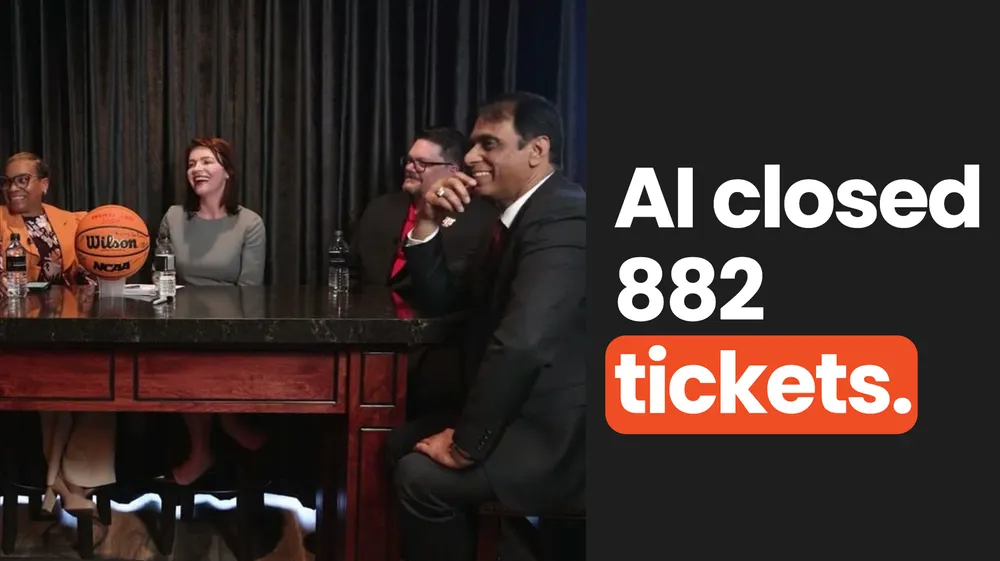
CIOs from Scottsdale, Glendale, and Jackson, Mississippi, join T-Mobile to share what’s actually working: an AI help desk that resolved 882 tickets in one quarter, guardrails that keep shadow AI out, and a city-built app now used by 40% of Arizona cities.
 Joe Toste
Santa Barbara, CA
Player
Show notes
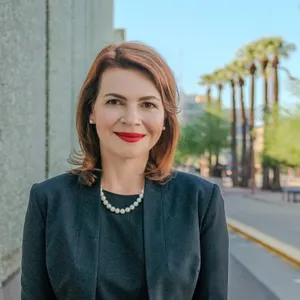
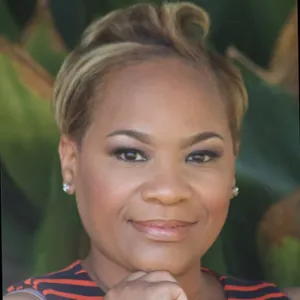
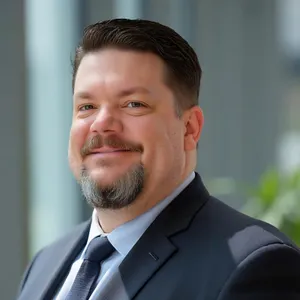
In this episode, recorded in-person at GMI in Scottsdale during Final Four week, Dr. Bianca Lochner (CIO, City of Scottsdale), Feroz Merchhiya (CIO, City of Glendale), Dr. Muriel Reid (CIO, City of Jackson, MS), and Ken Williams (T-Mobile) share what’s working in local government. Bianca walks through Scottsdale’s council-approved smart city roadmap, from a city-owned fiber network to IoT pilots that predict water use and help manage late-night noise in Old Town.
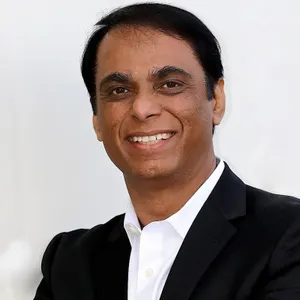
The conversation then turns to AI and public safety. Feroz explains how Glendale’s AI help desk went from project start to production in about four months and resolved 882 tickets in its first quarter, how his GIS Center of Excellence supported the Super Bowl, and how the team won an NVIDIA competition. Bianca shares Scottsdale’s governance-first approach to AI, built to keep shadow AI out, and Ken explains how T-Mobile’s 5G network can cut body-cam video delays to near real time.
Finally, the guests get into collaboration and friendly competition. Murali shares how Jackson, MS succeeds by asking for help and focusing on real needs, and Feroz tells how Glendale turned an internal sales tax app into a product now used by about 40% of Arizona cities.
Key takeaways
- Start AI where the pain is real. Glendale’s City Hall remodel moved service desk staff off-site, so the team used an AI help desk for tier-1 support. It resolved 882 tickets in its first quarter, and that proven ROI earned it an expansion into HR benefits questions.
- Govern first so you can move faster later. Scottsdale set up an AI administrative regulation, a governance committee, and tailored training before scaling use cases, which gives employees a safe path to innovate and keeps shadow AI out.
- Centralize the technical work, decentralize the ideas. Glendale’s hub-and-spoke GIS Center of Excellence gives departments room to innovate while running everything on one standard playbook.
- Buy what you need, not what’s trendy. Jackson assessed its real needs, eliminated duplicate services, and leaned on partners who were invested in the city’s success to stretch a tight budget.
- Connectivity is becoming a public safety tool. T-Mobile’s standalone 5G network can reserve dedicated capacity for priority traffic, the way it isolated broadcaster traffic at the Super Bowl, and can cut body-cam video delays to near real time.
- Your neighbors are both collaborators and competitors. Through regional groups like The Connective, cities share what works and then build on it, and Glendale turned an internal sales tax app into a tool now used by about 40% of Arizona cities.
Highlights
- 0:00 — Guest Introductions and Public Sector Backgrounds
- 3:55 — Scottsdale's Smart City Roadmap and Digital Privacy
- 7:32 — Fiber Network Infrastructure and Sustainability IoT Use Cases
- 11:00 — Glendale's GIS Center of Excellence and Major Event Management
- 16:44 — Jackson's Technology Partnerships and Data Consolidation
- 21:29 — Glendale's Implementation of Generative AI Solutions
- 27:59 — Scottsdale's Strategic Approach and Governance for AI
- 36:05 — Regional Collaboration and Competition in Arizona
00:00:00 Intros
00:03:55 Scottsdale's Smart City Journey and Digital Transformation
00:07:32 Fiber Network Infrastructure and IoT Implementation
00:11:00 Glendale's GIS Center of Excellence and Major Event Management
00:16:44 City of Jackson's Approach to Technology Partnerships and Challenges
00:20:27 T-Mobile's Role in 5G Smart City Infrastructure
00:21:29 Glendale's Implementation of Generative AI Solutions
00:27:59 Scottsdale's Strategic Approach to AI Implementation
00:32:41 Public Safety Communications Future with T-Mobile
00:36:05 Regional Collaboration and Competition in the Phoenix Metro Area
00:43:53 Cross-City Technology Sharing and Innovation
00:47:04 Closing Thoughts on Public-Private Collaboration
WEBVTT
00:00:00.000 --> 00:00:49.000
Today we're thrilled to have Dr. Bianca Lochner, CIO for the City of Scottsdale, Fraz, Merichia, CIO for the City of Glendale, Dr. Murali Reed, CIO for the City of Jackson, Mississippi, and Ken Williams at T-Mobile.
00:00:49.000 --> 00:00:52.000
A welcome to the Public Sector Show by Tech Tables.
00:00:52.000 --> 00:00:55.000
Super excited to have you all on here.
00:00:55.000 --> 00:00:58.000
Repeat guests, first timers, I love it.
00:00:58.000 --> 00:00:59.000
Awesome.
00:00:59.000 --> 00:01:02.000
Murali, quick intro and a little bit about yourself.
00:01:02.000 --> 00:01:05.000
I'm Dr. Murali Reed.
00:01:05.000 --> 00:01:06.000
I am a tech lover.
00:01:06.000 --> 00:01:16.000
I'm from Jackson, Mississippi, the City of Jackson, and I am the Director of Information Technology/Chief Information Officer.
00:01:16.000 --> 00:01:22.000
I'm also a adjunct professor at Dale Haven University in the area of computer information systems.
00:01:22.000 --> 00:01:23.000
I love it.
00:01:23.000 --> 00:01:24.000
Bianca, a little bit about yourself.
00:01:24.000 --> 00:01:31.000
I'm very excited to be here and finally be on this side of the podcast experience.
00:01:31.000 --> 00:01:44.000
I have spent my entire career, more than 20 years in public service, really passionate about leveraging technology to make a difference in my communities and love to serve in that way.
00:01:44.000 --> 00:02:11.000
I was previously in a K-12 environment serving as the CIO and all local government with the City of Scottsdale for almost three years and really grateful for the positive culture, the recognition that Scottsdale has, and also for the expertise and the brilliancy of my team that really all those ensure that we can continue to provide the best service for our Scottsdale residents, for the businesses we serve, and also for the more than 11 million visitors we welcome every year in Scottsdale.
00:02:11.000 --> 00:02:12.000
I love it.
00:02:12.000 --> 00:02:12.000
Ken.
00:02:12.000 --> 00:02:20.000
Ken Williams, I'm with T-Mobile and I manage our solutions engineering organization that supports the partner channel, as well as a team that supports our inside centers, call centers, fuel.
00:02:20.000 --> 00:02:21.000
Fantastic.
00:02:21.000 --> 00:02:22.000
Fraz.
00:02:22.000 --> 00:02:25.000
I guess I'm the youngest as far as So I'm the youngest.
00:02:25.000 --> 00:02:29.000
Let me let me finish.
00:02:29.000 --> 00:02:33.000
Youngest in terms of public sector tenure.
00:02:33.000 --> 00:02:41.000
Previously I was with private sector, so various different industries, high-tech, financial services, insurance.
00:02:41.000 --> 00:02:47.000
Glendale is my official outside of my consulting work as a public sector CIO.
00:02:47.000 --> 00:03:00.000
It's been almost four years now, fantastic experience, opportunity to do a lot of interesting things with the knowledge and understanding that what we do makes a difference in people's lives.
00:03:00.000 --> 00:03:02.000
Really enjoying that work and excited to be here.
00:03:02.000 --> 00:03:13.000
And if you want a very impressive long resume of Fraz, I watched a video on CIO.com and he's Fraz, let me just I got to cut over and introduce you.
00:03:13.000 --> 00:03:17.000
And I think it's like a five minute intro and so there's a lot of impressive stuff.
00:03:17.000 --> 00:03:22.000
But if you want the full the full background and full story, that there's a great interview there.
00:03:22.000 --> 00:03:24.000
Bianca, let's kick off with you.
00:03:24.000 --> 00:03:40.000
Scottsdale has been making impressive strides in its digital transformation journey over the past three years, as evidenced by the recent recognition as one of the top smart cities nationwide for your population category by the Center for Digital Government, and which we highlighted on the opening night here at GOMI.
00:03:40.000 --> 00:03:42.000
Thank you for coming on and and and touching on that.
00:03:42.000 --> 00:03:52.000
Scottsdale's smart city roadmap developed in collaboration with the community and ecosystem vendors showcases your commitment to leveraging technology to enhance the lives of the residents here.
00:03:52.000 --> 00:03:55.000
You mentioned that this was a five year roadmap.
00:03:55.000 --> 00:03:58.000
Let's start with the 30,000 foot overview for the audience.
00:03:58.000 --> 00:04:00.000
Where is Scottsdale on this journey today?
00:04:00.000 --> 00:04:15.000
So mentioned that we are fortunate enough to have the leadership that is a very visionary one, that is very citizen-centric and with with the community engagement, we pursued the the the smart city strategy as one of our goals for the city.
00:04:15.000 --> 00:04:21.000
And in 2019, our roadmap was approved, officially formally approved by our our city council.
00:04:21.000 --> 00:04:30.000
So we have several goals that were outlined in that roadmap and now in the process of implementing some of those goals.
00:04:30.000 --> 00:04:38.000
Again, using smart cities to leverage data, technologies and innovations to improve the lives of our community.
00:04:38.000 --> 00:04:53.000
And with that, it's about really understanding the capabilities that are in the market and how our partner vendors can really support us to provide solutions to the challenges that we identified as a community.
00:04:53.000 --> 00:05:01.000
And we also partnered with the Smart City Council, which is a global organization that helps us advance the smart city efforts.
00:05:01.000 --> 00:05:12.000
And that really helped us throughout the 2022 to leverage their expertise and some of their partnerships with those vendors that were really at the forefront of IoT technologies and solutions.
00:05:12.000 --> 00:05:14.000
And I mentioned data, right?
00:05:14.000 --> 00:05:22.000
Again, we have to be very cognizant that you cannot make a difference without leveraging data in a way that's really enabling.
00:05:22.000 --> 00:05:26.000
And smart cities are those solutions that have to collect a lot of data.
00:05:26.000 --> 00:05:42.000
And as a city, we are always being very mindful about being transparent and providing and empowering the community with knowledge of how we use the data that we collect and how they can have a say on how that data needs to be stored, safeguarded, and used.
00:05:42.000 --> 00:05:52.000
In 2021, we also published our digital privacy policy, again to bring that awareness and to recognize that the community has to have a say in that.
00:05:52.000 --> 00:05:53.000
And analytics, right?
00:05:53.000 --> 00:06:01.000
We evolved our data management program to enhance our capabilities to leverage some of the cloud analytics technologies as well.
00:06:01.000 --> 00:06:03.000
Then automations, right?
00:06:03.000 --> 00:06:10.000
We as many of our neighboring cities are looking to really build a strong strategy around AI and those new emerging technologies.
00:06:10.000 --> 00:06:15.000
Connectivity was really big for us on in terms of the roadmap as well.
00:06:15.000 --> 00:06:20.000
Building a city-owned fiber network that is going to really be future-proof for the city as well.
00:06:20.000 --> 00:06:24.000
And then most importantly, that is an engagement piece.
00:06:24.000 --> 00:06:49.000
So we we were fortunate to be able to develop an in-house CRM many years ago, continue to enhance that with community input and also we added to that a new platform that's called Speak Up Scottsdale, where we can really delve into specific problems and build maybe focus groups or targeted surveys and having that ongoing communications and engagement with our stakeholders.
00:06:49.000 --> 00:06:56.000
So all those kind of help us really execute on that smart city map and really pivot if we need to.
00:06:56.000 --> 00:07:12.000
And then obviously some of the use cases that we are implementing and then testing in collaboration with those partnerships, but also keeping in mind that those use cases once adopted, they have to be sustained and they have to be also equitably used, right?
00:07:12.000 --> 00:07:17.000
Not for an area of the city, but we are always looking how we can expand that benefit for the larger community.
00:07:17.000 --> 00:07:19.000
So you're very busy.
00:07:19.000 --> 00:07:21.000
This way you're very busy.
00:07:21.000 --> 00:07:25.000
This is where I want to talk about future proofing the City of Scottsdale.
00:07:25.000 --> 00:07:28.000
You mentioned building out the fiber network.
00:07:28.000 --> 00:07:30.000
I think there's plans to build like 100 miles of new fiber.
00:07:30.000 --> 00:07:32.000
Could you just maybe touch upon that?
00:07:32.000 --> 00:07:37.000
So that was a bond project again, the community identified that as a priority for the city.
00:07:37.000 --> 00:07:45.000
So it's really connecting all city buildings, all city assets, and because of that, we're able to secure those assets and the communications.
00:07:45.000 --> 00:07:50.000
And we're able to rapidly expand on our smart cities initiatives, right?
00:07:50.000 --> 00:08:07.000
Thinking in terms of IoT, one with the use cases and priorities for us is to enhance our real-time crime center capabilities and be able to really react to what's happening in real-time and be able to empower our first responders with that knowledge.
00:08:07.000 --> 00:08:11.000
Then we're also looking at sustainability, is another area that is a priority for us.
00:08:11.000 --> 00:08:13.000
Obviously, water conservation, right?
00:08:13.000 --> 00:08:23.000
We live in a desert and and for us is how do we apply those IoTs and emerging technologies to be more proactive about how we're using our water.
00:08:23.000 --> 00:08:41.000
One of the solutions that we piloted and we developed in collaboration with ASU and AWS, the Center for Cloud Innovation that's located here in Scottsdale, was to assess a way to really predict our the water consumption in various areas.
00:08:41.000 --> 00:08:52.000
Right, we have many golf courses here, so being able to target and really engage those agencies or stakeholders on making sure that they have awareness of how much they're conserving and how they can really narrow that.
00:08:52.000 --> 00:08:53.000
That's one example.
00:08:53.000 --> 00:09:03.000
Another pain point, we are very welcoming to global tourists and our old town area, entertainment center is a very popular one.
00:09:03.000 --> 00:09:13.000
And with that comes some some challenges for the neighboring communities with noise that are very prevalent, especially in the evenings and and nights.
00:09:13.000 --> 00:09:40.000
And we're looking at leverage IoT technologies to identify ways to assess the noise levels and then be able to partner with bar owners for them to be very proactive to letting lowering the music levels and the same time notifying the first responders that yeah, the right everybody's involved and thing something is is is taking place so that the neighbors can really not be affected in a very negative way.
00:09:40.000 --> 00:09:46.000
So a lot of use cases that we are either implemented or looking to leverage.
00:09:46.000 --> 00:09:48.000
Is the meter like as it goes up, is like copters showing up?
00:09:48.000 --> 00:09:49.000
Yes.
00:09:49.000 --> 00:09:51.000
Guys, so they're already showing up.
00:09:51.000 --> 00:09:58.000
So the goal is for them to show up after there's no need for them to intervene and real-time notifications.
00:09:58.000 --> 00:10:02.000
And it's amazing that technologies are quite advanced that real-time we can assess that.
00:10:02.000 --> 00:10:11.000
But obviously there's still not specifically to this challenge, so we are partnering with those developers to to refine them for the Scottsdale use case.
00:10:11.000 --> 00:10:12.000
That's great.
00:10:12.000 --> 00:10:13.000
Do you like coffee?
00:10:13.000 --> 00:10:13.000
I love coffee.
00:10:13.000 --> 00:10:17.000
Okay, so do you ever go to Berdinas in Old Town, Scottsdale?
00:10:17.000 --> 00:10:18.000
Maybe.
00:10:18.000 --> 00:10:19.000
You know what I'm talking about?
00:10:19.000 --> 00:10:21.000
I I know what you're talking about.
00:10:21.000 --> 00:10:23.000
We we have so many great options.
00:10:23.000 --> 00:10:24.000
Yeah.
00:10:24.000 --> 00:10:26.000
No, there are a lot of great options.
00:10:26.000 --> 00:10:30.000
Fraz, Glendale is quickly becoming this go-to destination.
00:10:30.000 --> 00:10:33.000
Now, I know Scottsdale is known for the bachelorette parties, right?
00:10:33.000 --> 00:10:36.000
That's like the party one.
00:10:36.000 --> 00:10:37.000
That's the big one.
00:10:37.000 --> 00:10:42.000
Glendale hosted the Super Bowl last year, now the final four this week.
00:10:42.000 --> 00:10:47.000
These are like big high-profile events which definitely increases the public safety visitor experience.
00:10:47.000 --> 00:10:54.000
You mentioned how Glendale has centralized its GIS function, which is a core piece of any public sector organization.
00:10:54.000 --> 00:11:00.000
Do you want to just share a few examples of that centralization and how that's enabled Glendale to provide better services?
00:11:00.000 --> 00:11:03.000
Before I do that, you missed one major event.
00:11:03.000 --> 00:11:04.000
Probably.
00:11:04.000 --> 00:11:05.000
Which one?
00:11:05.000 --> 00:11:09.000
Taylor Swift started her concert series in Glendale.
00:11:09.000 --> 00:11:12.000
We renamed our city to Swift City.
00:11:12.000 --> 00:11:14.000
I missed Swift City.
00:11:14.000 --> 00:11:16.000
That's one, not to mention.
00:11:16.000 --> 00:11:17.000
Okay, I got to ask.
00:11:17.000 --> 00:11:18.000
I got to ask, are you a Swiftie?
00:11:18.000 --> 00:11:19.000
Are you a Swifty?
00:11:19.000 --> 00:11:21.000
No.
00:11:21.000 --> 00:11:26.000
My function is enabling the best experience people can have.
00:11:26.000 --> 00:11:33.000
I didn't get to attend the game, I don't get to attend the concert, I make sure that everything happens seamlessly.
00:11:33.000 --> 00:11:37.000
Yes, coming back to our GIS Center of Excellence.
00:11:37.000 --> 00:11:54.000
When I joined about four years ago, GIS was a function that was diffused and distributed in various different departments, and everybody was using technology the way they thought was appropriate and were trying to get the best out of it.
00:11:54.000 --> 00:12:04.000
But there was no focus in terms of how you can leverage this technology to truly enhance the capability of your urban operation.
00:12:04.000 --> 00:12:08.000
Because GIS allows you to do so many things at various different levels.
00:12:08.000 --> 00:12:22.000
So if you talk about sustainability, it has capability and we have built some of that which we have leveraged for our water services during water conservation, especially a couple of years ago when we were in the middle of a drought.
00:12:22.000 --> 00:12:30.000
And we declared level one emergency and then new construction was basically put on hold.
00:12:30.000 --> 00:12:50.000
We were able to produce dashboard for our water services so that they can utilize and see how water was being conserved, where the consumption was high, how they could incentivize our citizen to conserve water and come out of this drought situation without major significant harm.
00:12:50.000 --> 00:12:51.000
So that's one example.
00:12:51.000 --> 00:12:54.000
But use of technology is one thing.
00:12:54.000 --> 00:12:59.000
Creating an operating model that is sustainable was the first thing that we needed to do.
00:12:59.000 --> 00:13:19.000
So we created this center of excellence where we created a hub and spoke model, so we gave department autonomy to do what they want to do, so you don't want to stifle the innovation, but at the same time, the technical aspect needed to be centralized so you can enhance your capabilities following a standard playbook.
00:13:19.000 --> 00:13:21.000
So that's basically what we did.
00:13:21.000 --> 00:13:26.000
How we used it in various different situations, so sustainability is one example.
00:13:26.000 --> 00:13:34.000
During Super Bowl and we're going to use it even in upcoming final four, providing capabilities to our first responder, prevent planning.
00:13:34.000 --> 00:13:47.000
Prevent planning they used to do before was literally a clipboard and they would go and survey the site and identify where they need to have their resources deployed in case of a emergency situation.
00:13:47.000 --> 00:14:01.000
Now they have an app on their phone, it's a GIS app and they can go literally point, click, point, click and they have all that information not only available on their phone, but it's available centralized so others can leverage it.
00:14:01.000 --> 00:14:13.000
Otherwise, the previous workflow was I go to a site survey, collect that information on a paper, go back to the office, upload it into the system and then everybody has access to it.
00:14:13.000 --> 00:14:14.000
Now it's real-time.
00:14:14.000 --> 00:14:19.000
National, there's a national body for missing and exploited children, so we partner with them.
00:14:19.000 --> 00:14:31.000
We create a site with GIS capability, so in those major events, if there are sightings of those missing children, we can notify our law enforcement national entity so that it can help.
00:14:31.000 --> 00:14:36.000
So it's a bigger level of an effort, but those are usually undertaken during large events.
00:14:36.000 --> 00:14:40.000
So we at three events that we just talked about, we're leveraging that.
00:14:40.000 --> 00:14:48.000
Another thing from a GIS point of view that we do, we have the entire map of all our water supplies.
00:14:48.000 --> 00:14:55.000
So one of the things during Super Bowl preparation what we did was looking at a cybersecurity table top exercise.
00:14:55.000 --> 00:15:00.000
And this is where you see our physical and digital world coming together.
00:15:00.000 --> 00:15:07.000
Any scenario that we started on the physical side ended up on the digital or the one on the digital ended up on the physical side.
00:15:07.000 --> 00:15:25.000
Water services, intelligent transportation system, all those were part of our playbook, leveraging GIS to identify critical assets, how do we protect them, how do we provide advanced notification to our first responders so they can respond to situations that may come up.
00:15:25.000 --> 00:15:28.000
So that's what our GIS Center of Excellence has done.
00:15:28.000 --> 00:15:36.000
Last thing that I would tell you about our GIS Center of Excellence, Nvidia, we all know about Nvidia, the big, yeah, exactly.
00:15:36.000 --> 00:15:41.000
If you're interested in AI, obviously that name goes with AI.
00:15:41.000 --> 00:15:45.000
They run a competition, it's an international competition they run every year.
00:15:45.000 --> 00:15:52.000
We our GIS Center of Excellence participated in it, we were the only one winner for last year 2023.
00:15:52.000 --> 00:15:59.000
And basically leveraging Nvidia technology, taking a 2D image and converting into a 3D image.
00:15:59.000 --> 00:16:04.000
So we did that for a State Farm Stadium and that became a winning entry.
00:16:04.000 --> 00:16:13.000
Not only did we win, but the best part was that our developers who were part of that competition contributed to the product development.
00:16:13.000 --> 00:16:21.000
So literally, I can show you a GitHub feed where they were exchanging ideas and the product team on the other side were saying, yeah, we we can incorporate that.
00:16:21.000 --> 00:16:23.000
So you're helping Nvidia's stock price go to the moon.
00:16:23.000 --> 00:16:28.000
It's like We are, we like to think we made a small contribution to the industry.
00:16:28.000 --> 00:16:31.000
But that's our GIS Center of Excellence.
00:16:31.000 --> 00:16:32.000
That's fantastic.
00:16:32.000 --> 00:16:37.000
Murali, the City of Jackson has faced its own share of challenges from infrastructure issues to budget constraints.
00:16:37.000 --> 00:16:44.000
How are you leveraging the partnerships and collaborations with other public and private sector entities to overcome these obstacles?
00:16:44.000 --> 00:16:47.000
Basically what I do is ask for help.
00:16:47.000 --> 00:16:56.000
That's one thing that I think in technology we must all understand, I'm sure everybody in this room understands, that you can't do it all on your own.
00:16:56.000 --> 00:17:04.000
And I've heard it several times here, and a lot of times it seems like we have to do it all on our own, but we really don't have to.
00:17:04.000 --> 00:17:15.000
We do have local vendors that really have stepped up and come to the City of Jackson to say, hey, we want to help you, we need to help you.
00:17:15.000 --> 00:17:25.000
And it's been very interesting since I've been in the position how much people are gravitating towards the City of Jackson.
00:17:25.000 --> 00:17:36.000
We have a lot of good things going on in the city, and we also have, like you said, challenges with water, budget, infrastructure and things like that.
00:17:36.000 --> 00:17:45.000
But we do also have people that know how to assist and solve these problems and help us solve these problems within our budget.
00:17:45.000 --> 00:17:57.000
One thing that we've been able to do is assess, do a real life assessment of what we really need, not, you know, what we think is cool and hip, but what do we really need.
00:17:57.000 --> 00:17:59.000
So that's the first thing that we've been doing.
00:17:59.000 --> 00:18:03.000
We're also making sure we don't have any duplication of services.
00:18:03.000 --> 00:18:06.000
If we do, we see what's working and what's not.
00:18:06.000 --> 00:18:12.000
And in there, if we have vendors that's not giving us great customer service or great product, they're going to.
00:18:12.000 --> 00:18:24.000
Just being realistic about what you need, what you can do within your budget and partnering with the right people to get done what you need to get done.
00:18:24.000 --> 00:18:35.000
And we've had some great success over the last two years with partnering with the right people that really care about the City of Jackson and is interested in building the community up.
00:18:35.000 --> 00:18:43.000
And so I think this what we've been able to do and just leverage to what you said, just leveraging that.
00:18:43.000 --> 00:18:48.000
And we come up with some beautiful success stories in the end.
00:18:48.000 --> 00:18:49.000
That's great.
00:18:49.000 --> 00:18:56.000
Is there one particular success story that comes to mind that I know you recently are are are moving this consolidation of everything under one house.
00:18:56.000 --> 00:18:59.000
Is there one specific story that that you would like to share?
00:18:59.000 --> 00:19:06.000
We were having issues with the data that we have, we collect a whole lot of data.
00:19:06.000 --> 00:19:12.000
But we didn't have a way to really pull the data that we really wanted.
00:19:12.000 --> 00:19:16.000
So we needed some mechanism to help us sort this data.
00:19:16.000 --> 00:19:24.000
We don't have the manpower, like most of you all here, don't have the manpower to do that from a human perspective.
00:19:24.000 --> 00:19:49.000
But there were two particular companies that reached out to us and said, hey, at this point, since you all have taken, let's just say JPD to from paper and pencil to automation, there's a lot of data that of course our police officer would need on the street and just in house to to provide services for our citizens, right?
00:19:49.000 --> 00:20:05.000
They were able to come in and do an assessment and lend a hand with providing us some data analytics strategies until we can get to the point where we can really build that part of our department up.
00:20:05.000 --> 00:20:06.000
That's great.
00:20:06.000 --> 00:20:18.000
Ken, T-Mobile has been a key player in the 5G space, making significant investments in infrastructure and partnering with cities like Peachtree Corners, Georgia, and the Curiosity Lab to explore smart city initiatives.
00:20:18.000 --> 00:20:28.000
As T-Mobile has collaborated with cities on 5G smart city projects, what are some of the valuable lessons that you've seen from your customers partnering with local governments?
00:20:28.000 --> 00:20:29.000
That's a great question.
00:20:29.000 --> 00:20:33.000
I would start with we had to take a more holistic approach to what we did.
00:20:33.000 --> 00:20:38.000
We would go in a lot of times and we would talk about how we could save you money on a phone or a tablet or a hotspot.
00:20:38.000 --> 00:20:44.000
And for most of the CIOs that we've met over the last couple of days, that's probably the lowest priority in their list of things, right?
00:20:44.000 --> 00:20:50.000
Had a conversation earlier where somebody said, look, if I can just get our ERP program out the window, I'd be happy.
00:20:50.000 --> 00:20:51.000
That's not what we were there for.
00:20:51.000 --> 00:20:55.000
And so we had to take a step back and really look at what we were bringing to the table.
00:20:55.000 --> 00:21:01.000
And a big part of that was that we had to realize, I'm going to steal words from you, we couldn't do it all on our own, we had to ask for help.
00:21:01.000 --> 00:21:12.000
And so we built this massive partner community with partners such as GMI, which can come out and really talk to the C-levels and say, hey, this is what we do, and we're better together with T-Mobile.
00:21:12.000 --> 00:21:14.000
And know that's that's absolutely great.
00:21:14.000 --> 00:21:20.000
Fraz, it's impressive to hear about Glendale's proactive approach to implementing generative AI solutions.
00:21:20.000 --> 00:21:30.000
We we talked about this on on our call, we had a great we had a great conversation uh about just around this, but I'm curious around two to three use cases specifically that you would like to share with the audience today.
00:21:30.000 --> 00:21:31.000
Sure.
00:21:31.000 --> 00:21:41.000
Yeah, generative AI is or AI in general was an area of interest for me before OpenAI and Chat GPT version two to the scene.
00:21:41.000 --> 00:21:51.000
When this came up as an idea and everybody was curious started to explore, naturally within IT, our department is called Innovation and Technology.
00:21:51.000 --> 00:21:59.000
So this was perfect opportunity to be innovative and figuring out how we can leverage this emerging technology.
00:21:59.000 --> 00:22:02.000
And two things were important to us.
00:22:02.000 --> 00:22:09.000
One was it's a new technology, so you want to have a policy or a framework around it, how you want to use it.
00:22:09.000 --> 00:22:18.000
For my from my previous experience, I knew two things were important when you are looking at AI, one is data and other is algorithm.
00:22:18.000 --> 00:22:22.000
So if you have a messed up data and you have perfect algorithm, you're going to get a mess.
00:22:22.000 --> 00:22:26.000
And you have a good data but messy algorithm, you're going to get a mess.
00:22:26.000 --> 00:22:34.000
So how do we contain those two risk and still leverage technology and then benefit from it?
00:22:34.000 --> 00:22:44.000
So that started our search exploring various different options and we decided to pursue an AI option that leveraged our own data.
00:22:44.000 --> 00:23:00.000
So the first area was the area of technology and the timing couldn't have been perfect because City Hall for for City of Glendale was an old brute architecture building that was due for replacement and timing worked out fine.
00:23:00.000 --> 00:23:05.000
Council approved it and we were about to embark on the remodeling.
00:23:05.000 --> 00:23:17.000
Which meant that previously I could send out a couple of service desk folks to provide elbow to elbow support to our user community 500 or so in the City Hall.
00:23:17.000 --> 00:23:26.000
Now they were all in a satellite location somewhere five to seven mile distance, so you have a travel time, all that and you still have the same team.
00:23:26.000 --> 00:23:28.000
So how do you solve that problem?
00:23:28.000 --> 00:23:34.000
So maybe AI can solve that problem, so all your tier one support tickets can be handled through that.
00:23:34.000 --> 00:23:37.000
Then we started looking at various different solutions that were available.
00:23:37.000 --> 00:23:45.000
There were generation one bots which were basically hard to configure and even if you configure long maintenance time, all those things.
00:23:45.000 --> 00:23:57.000
So we settled on this generative AI solution that fit nicely with our existing technology ecosystem, primarily with our team's platform with Microsoft Office 365.
00:23:57.000 --> 00:24:01.000
So we looked at the product beginning of 2023.
00:24:01.000 --> 00:24:07.000
We started the project May of 2023, we went live on September 20th.
00:24:07.000 --> 00:24:27.000
Less than a year, it's in full production, one quarter, and I can tell you about 882 tickets were resolved and productivity hours were restored for our 2,000 employees where they were opening the ticket and we call it blaze, blazing fast service and blazing heat of Arizona.
00:24:27.000 --> 00:24:35.000
So our blaze was able to resolve those and it was also able to save our service desk time also.
00:24:35.000 --> 00:24:37.000
So you have saving on both sides.
00:24:37.000 --> 00:24:45.000
So once we were able to demonstrate that there is an ROI, now we are rolling it out to our HR.
00:24:45.000 --> 00:24:57.000
So scenario benefit enrollment starts in few months and the HR department will be inundated with phone calls regarding various different benefit options, things of that nature.
00:24:57.000 --> 00:25:09.000
If you ask an employee to go to our intranet site and look up that information, sometime that information is five level, 10 level deep, somewhere embedded in the document.
00:25:09.000 --> 00:25:16.000
AI can serve up that information right there on an interface that they are naturally working in.
00:25:16.000 --> 00:25:19.000
So that's coming in next 90 days, that would be live.
00:25:19.000 --> 00:25:27.000
And then very unique use case, again, these are all related to the major event of City Hall being remodeled, right?
00:25:27.000 --> 00:25:36.000
Choosing the use case, choosing the success criteria and the parameters under which you want to work is the best thing.
00:25:36.000 --> 00:25:42.000
For us, going and getting a large language model and building a solution didn't make sense at this juncture.
00:25:42.000 --> 00:25:45.000
In future it may.
00:25:45.000 --> 00:25:48.000
But one last use case I'll talk about which is interesting.
00:25:48.000 --> 00:26:05.000
So our City Attorney's office, they review contracts, they develop write contracts and often time there are situations where they have to look at say a privacy clause that they want to add and they want a precise language that was created in particular contract.
00:26:05.000 --> 00:26:22.000
So now we have an AI solution uniquely designed for that use case, just for City Attorney's office, where they can go through, scan within our environment, not outside, because we don't know the veracity of source that they're going to go and pull up information.
00:26:22.000 --> 00:26:24.000
This is our data.
00:26:24.000 --> 00:26:33.000
They're going to go check and serve up all those five permutations of privacy clause and let the attorney choose which one is appropriate.
00:26:33.000 --> 00:26:45.000
Or if they know exactly which one, then it'll serve up the one that What it does is it speeds up time to value, but it retain it gives you that control that attorney would like or any employee would like at any point in time.
00:26:45.000 --> 00:26:56.000
So you're not giving an AI free rein, but you're enhancing the experience of creating contract, time to value is shortened, all those things are part of it.
00:26:56.000 --> 00:27:04.000
These things are We did a recent presentation for our Maricopa Association of Government Technology Advisory Groups, one of many of my peers.
00:27:04.000 --> 00:27:08.000
So we showcased how it was done, we demoed the product also.
00:27:08.000 --> 00:27:11.000
I like that use case with the health health benefits.
00:27:11.000 --> 00:27:18.000
I being very curious, I live in California, so I took the it was like renewal season in January or whatever, and I took the the whole they send you like a 90 page document, right?
00:27:18.000 --> 00:27:21.000
I'm like and I'm not reading this, I'm not going to go through this.
00:27:21.000 --> 00:27:24.000
And the price like goes up 20%, right?
00:27:24.000 --> 00:27:30.000
So I I put it in and it didn't even like process, Chat GPT just said, no, sorry.
00:27:30.000 --> 00:27:33.000
Yeah, we you can't process sensitive information like that.
00:27:33.000 --> 00:27:36.000
Um, but I want to hear if you can get this working.
00:27:36.000 --> 00:27:40.000
I I might ask for a side help if you can help me for this upcoming year.
00:27:40.000 --> 00:27:41.000
That would be fan that would be great.
00:27:41.000 --> 00:27:47.000
Bianca, love to hear, are there any use cases? I know you have a lot going on.
00:27:47.000 --> 00:27:54.000
I know because I also talked to Rob Lloyd and he had 27 questions and I'm like, Rob, you don't get 27 questions, you get one question.
00:27:54.000 --> 00:28:00.000
But I just love to hear, are there any use cases in particular that are on the product roadmap or that you're thinking about?
00:28:00.000 --> 00:28:02.000
Yeah, no, absolutely.
00:28:02.000 --> 00:28:05.000
We but I would like to start with the beginning, right?
00:28:05.000 --> 00:28:09.000
As with any new emerging technology, we always build a strategy for that, right?
00:28:09.000 --> 00:28:13.000
And the strategy has to align with the city's goals.
00:28:13.000 --> 00:28:27.000
And in the fall of last year, all those things are right and realize that during AI is going to be the future of impacting the future as a city, we realize that we need to come together as an executive team and really build that strategy.
00:28:27.000 --> 00:28:33.000
It's about really making it making sure that we have guardrails around this implementation or adoption.
00:28:33.000 --> 00:28:44.000
And like other cities, we one of the first ones to develop a administrative regulation, so this is internal policy to really ensure that our employees understand the risks, but also the benefits of leveraging this innovation.
00:28:44.000 --> 00:28:51.000
And then they can do that safely and in a way that's very empowering to them.
00:28:51.000 --> 00:28:59.000
And making sure that they understand what some of the use cases benefits and then what can happen if they step up outside of those boundaries.
00:28:59.000 --> 00:29:06.000
And then with that, we also want to make sure that we have training that are really tailored to what the policy covers.
00:29:06.000 --> 00:29:26.000
And for that, we realize that we cannot really do it as a as an IT department alone or have to put that burden in other departments within the city, we had to really implement a governance platform, a governance steering committee and making sure that we are very again, we are very mindful about how we roll this out.
00:29:26.000 --> 00:29:30.000
The same time as really assessing what the value can be for this innovation.
00:29:30.000 --> 00:29:44.000
So we're in the process of implementing a a platform that is going to really help empower the leadership to ensure that we have guardrails online, the the risk that we were willing to take are communicated throughout our organization so we don't have shadow AI.
00:29:44.000 --> 00:30:04.000
And then any new use cases or individual desires to to test this new AI capabilities are really formalized and we have a way to first of all track them, but also to then support those users um in long term and make sure that as our policy continues to uh we continue to enhance it, we can try these changes within the organization.
00:30:04.000 --> 00:30:07.000
So really safely, innovating safely, right?
00:30:07.000 --> 00:30:12.000
So we're going a little bit slowly in the beginning, but we're going to be able to go fast, faster because we have this in place.
00:30:12.000 --> 00:30:16.000
So now for use cases, again, as a leadership team, so when I say leadership, it's not just the executives, right?
00:30:16.000 --> 00:30:32.000
It's all those members within all departments that are very forward thinking, they see a way that this innovation can improve their own experiences as employees, but also the experiences of our stakeholders within community.
00:30:32.000 --> 00:30:37.000
So we came together again and we had Gardner facilitate at one day workshop where we we just put everything out there, right?
00:30:37.000 --> 00:30:42.000
What are we thinking like big picture, but also the art of the possible.
00:30:42.000 --> 00:30:50.000
And then we by the end of the day, we were also able to prioritize those in terms of value outcomes, but also in terms of feasibility, right?
00:30:50.000 --> 00:31:05.000
To mention we don't have million dollars to develop our own chatbot or bots, the same time we can now that we have this as a priority, we can assess the market and see what commercial solutions are that already have those AIs embedded solutions, right?
00:31:05.000 --> 00:31:17.000
So one of the use case though that came out of this workshop that was a top priority was how do we make sure that we, right, provide better service in terms of our citizens engagement with our thrower call centers.
00:31:17.000 --> 00:31:28.000
So we had right the great experience, great readings before, but we always want to our mission is to provide better better service for world class community, so we always want to raise the bar.
00:31:28.000 --> 00:32:02.000
And we partnered again with AWS and we are now piloting a solution called AWS Connect to again track right all the calls in terms of the data and be able to real-time assess that data and be able to report out to those making decisions, what services we need to enhance, what services we need to add, but the same time empowering those call center representatives to be able to faster respond or be able to forward a call or forward an ask to specific departments as they never been able to do before because maybe some of the integrations weren't available to us.
00:32:02.000 --> 00:32:08.000
And the goal is to really expand that throughout the city with other use cases that will come from from this, right?
00:32:08.000 --> 00:32:15.000
911 is one of them, we're not quite ready there yet, but definitely we're going to be assessing the outcomes here.
00:32:15.000 --> 00:32:22.000
And we're looking at building then from this solution, expanding it to build a city-wide bot, internally, but also citizen-facing.
00:32:22.000 --> 00:32:30.000
Again, not quite there yet, but in the very, very near future, doing it safely, doing it very transparently and very strategically.
00:32:30.000 --> 00:32:31.000
I love that.
00:32:31.000 --> 00:32:41.000
Ken, if you talk about the public safety space, specifically how T-Mobile is able to better leverage its resources now with the in the post-Sprint T-Mobile era of public safety.
00:32:41.000 --> 00:32:44.000
Yeah, I think it's no secret to the general public, right?
00:32:44.000 --> 00:32:46.000
Sprint had tons of spectrum.
00:32:46.000 --> 00:32:49.000
They just didn't have the finances to get it out there the way that we needed to.
00:32:49.000 --> 00:33:01.000
T-Mobile having purchased Sprint was able to take that spectrum and in what I consider record time, less than two years, propagate a network now that is the nation's only 5G standalone network.
00:33:01.000 --> 00:33:07.000
The reason that standalone component is so important is it allows us to do things like segment sections of the traffic off.
00:33:07.000 --> 00:33:14.000
So we have the Super Bowl in Vegas not too long ago, we were able to take all of the broadcaster traffic and segment that into a special slice.
00:33:14.000 --> 00:33:18.000
So that the normal consumer didn't see any fluctuation in the network.
00:33:18.000 --> 00:33:25.000
Did the same thing with F1, and we can do the same thing for law enforcement down the road here as we start to develop more and more around that.
00:33:25.000 --> 00:33:31.000
You'll also see, we just had channel partners not too long ago, and so back to our partner community and how important they are to us.
00:33:31.000 --> 00:33:35.000
We had several meetings with partners all around public safety.
00:33:35.000 --> 00:33:41.000
I saw things from a box the size of a light switch that goes on the wall that will do gun detection.
00:33:41.000 --> 00:33:49.000
And we're moving the edge compute all the way into this box, so it's not putting tons of data late data latency into the process.
00:33:49.000 --> 00:33:58.000
And with an error rate of less than 1/10th of a percent, they're able to cut out the human factor where a human has to then look at the how much quicker could we first responders out if that was the instance.
00:33:58.000 --> 00:34:01.000
We're looking at things like body cam, live footage from body cams.
00:34:01.000 --> 00:34:08.000
Right, right now if you look at the way most police departments are put together, there's a delay anywhere from last time I looked, 60 seconds to 90 seconds, right?
00:34:08.000 --> 00:34:13.000
That's a significant delay when you're telling people what to do in the field.
00:34:13.000 --> 00:34:19.000
With what we've done with the 5G network now, we can shrink that latency down and get it almost real-time.
00:34:19.000 --> 00:34:20.000
No, that's no, that's fantastic.
00:34:20.000 --> 00:34:30.000
I'm curious around what does the landscape look like for public safety communications in the in the coming years, like how how what does that look like for T-Mobile, what's their roadmap vision for that?
00:34:30.000 --> 00:34:34.000
Yeah, I think legal would get really mad at me if I shared way too much around that.
00:34:34.000 --> 00:34:35.000
That that's what he said, where's he at?
00:34:35.000 --> 00:34:36.000
You already leave?
00:34:36.000 --> 00:34:38.000
That's that's what he said.
00:34:38.000 --> 00:34:45.000
But what I can share with you is this, I can tell you that from our C-suite all the way down, it is something that we're constantly looking at.
00:34:45.000 --> 00:34:51.000
Our product teams, which I liaise on into through our partner channel, they're constantly looking at what's next for law enforcement.
00:34:51.000 --> 00:34:56.000
What's next in public safety and not just let's go in and make smart street lights.
00:34:56.000 --> 00:35:02.000
Right, we're we're looking at things like can we route police officers to an incident faster than we're doing it today?
00:35:02.000 --> 00:35:05.000
And can we do that using some of the smart city appliances that are out there?
00:35:05.000 --> 00:35:15.000
Right, partners like Digi who create modems and things that we can put into a box on the street corner that then control all the smart analytics back to the AI discussion earlier.
00:35:15.000 --> 00:35:23.000
All that smart analytics and all the products and things that go into this box that now allow us to do that opt route optimization, changes the lights all green down Broadway.
00:35:23.000 --> 00:35:25.000
Imagine that for a second.
00:35:25.000 --> 00:35:31.000
In the old days, we used to tell police officers, you used to tell my dad's a retired comp, he will always tell you this, the straight line is never the fastest route.
00:35:31.000 --> 00:35:34.000
You're going to go left to go right, you're going to go right to go left.
00:35:34.000 --> 00:35:42.000
Nowadays with some of the technology that's out there and some of the things that we're seeing our partners work on, the straight line will be the fastest route here in the future.
00:35:42.000 --> 00:35:42.000
That's great.
00:35:42.000 --> 00:35:48.000
We're going to translate to our final section around collaboration and community.
00:35:48.000 --> 00:35:49.000
This is obviously my favorite section.
00:35:49.000 --> 00:35:56.000
We talk probably talk about on every podcast because I actually have a friend who says, without a community, you're just a commodity.
00:35:56.000 --> 00:35:57.000
Which is so true.
00:35:57.000 --> 00:36:05.000
So Bianca, love to hear about how you've been collaborating with peers like Fraz, and I know you've I've read articles, I know you Yeah, very collaborative.
00:36:05.000 --> 00:36:11.000
And competitive as well, I would say, but that makes us all better, right?
00:36:11.000 --> 00:36:12.000
Yeah, I love that.
00:36:12.000 --> 00:36:17.000
You just touch upon that collaboration and maybe even competition in the honor of final four.
00:36:17.000 --> 00:36:18.000
There you go.
00:36:18.000 --> 00:36:20.000
So there are many examples, right?
00:36:20.000 --> 00:36:29.000
We again, partnerships are key to our strategy and one of our collaborative is very is one of the principles we can make lives of our communities better.
00:36:29.000 --> 00:36:41.000
So Scottsdale is one of the co-founders cities of the Connective, is a regional smart city consortium that came together a few years ago to to empower the greater Phoenix community with to build the most connected smart region.
00:36:41.000 --> 00:36:54.000
I think we're the first smart region in in the US to really develop and deploy technology that is scaled to share best practices, to share data, and to implement solutions of scale.
00:36:54.000 --> 00:37:08.000
We many of our cities here in greater in the very Phoenix region are part of this connective and we come together a few times a month and we talk about our challenges and some of the challenges are common challenges because our residents have similar expectations.
00:37:08.000 --> 00:37:16.000
But then there are some specifics that Scottsdale might be focusing on that might not be of importance to Glendale or vice versa.
00:37:16.000 --> 00:37:26.000
One example for us, we looked at digital kiosks as wayfinding solutions and one of our sister cities, neighboring cities had already implemented that solution so we want to get excited about it.
00:37:26.000 --> 00:37:30.000
When we came back and we surveyed our community members, they didn't want that.
00:37:30.000 --> 00:37:36.000
They didn't want a kiosk in the middle of Old Town being a nuisance because it's not part of the city branding, right?
00:37:36.000 --> 00:37:42.000
So they have other ways to find their ways is maybe it's easier because we're so centralized or um so that's one example.
00:37:42.000 --> 00:37:49.000
But then we constantly talk about the unique identity of citizens, right?
00:37:49.000 --> 00:37:58.000
To to them, they might not care that they live in one city and they work in another city, they want the services to be seamless, their experience to be seamless.
00:37:58.000 --> 00:38:06.000
And that's one of the ways that maybe we can serve them even better to have a way to access the services with one one one unique identifier, any.
00:38:06.000 --> 00:38:13.000
So there are very very much collaborative, very much ideation sessions we we have and sharing.
00:38:13.000 --> 00:38:16.000
The other organizations we're part of is What Works Cities.
00:38:16.000 --> 00:38:27.000
Scottsdale was one of the first cities, I think in in Arizona to be recognized as a water city, so these are cities that are really data driven, data enabled and really using data to to make a difference.
00:38:27.000 --> 00:38:39.000
And now many of our Arizona cities are either silver or gold, Scottsdale just received gold and one of other other neighboring cities are platinum, so ready to in July we're going to be platinum too, right?
00:38:39.000 --> 00:38:41.000
So so that's another example.
00:38:41.000 --> 00:38:51.000
And then US collaboration uh that we're part of last year, we were one of the first 20 cities to be selected by Bloomberg Philanthropies for the City Data Alliance program.
00:38:51.000 --> 00:39:04.000
This is a program that in the next three years, they're going to include 100 cities around South, Central and North America to again provide those opportunities for partnerships with global entities to make difference in local communities.
00:39:04.000 --> 00:39:11.000
So we're one of the first and as an outcome of that partnership, we were the first city to publish a data service standard.
00:39:11.000 --> 00:39:26.000
So that's really going beyond open data, publishing data is really engaging the community to to make if find a way that we can share data in an interactive way that's really meaningful to them to get to understand what's happening and how we make decisions.
00:39:26.000 --> 00:39:37.000
So that was a great, great way to start that and now because we're members of that, we can learn from all the other cities that are going through this program and be able to leverage some of the solutions they're developing as well.
00:39:37.000 --> 00:39:41.000
So always looking to collaborate and and share what we're doing and and learn from others as well.
00:39:41.000 --> 00:39:42.000
I love that.
00:39:42.000 --> 00:39:48.000
Fraz, in the honor of competition and basketball, how do you like to push the ball up the court?
00:39:48.000 --> 00:39:55.000
I know you collaborate with Bianca, but what are some areas where you're like, I really want to recruit folks from Scottsdale to Glendale.
00:39:55.000 --> 00:39:56.000
Glendale.
00:39:56.000 --> 00:39:56.000
Okay, I'm the camera is right there, the camera is right there.
00:39:56.000 --> 00:39:57.000
[laughter]
00:39:57.000 --> 00:39:57.000
Okay.
00:39:57.000 --> 00:39:58.000
And okay, the camera is right there.
00:39:58.000 --> 00:39:59.000
The camera is right there.
00:39:59.000 --> 00:39:59.000
Okay, I'll
00:39:59.000 --> 00:40:01.000
Okay, I'm I'm going to look at the camera.
00:40:01.000 --> 00:40:06.000
And I'll say I do not subscribe to that idea of coaching.
00:40:06.000 --> 00:40:07.000
Not coaching, man.
00:40:07.000 --> 00:40:08.000
[laughter]
00:40:08.000 --> 00:40:10.000
That was a tough question there.
00:40:10.000 --> 00:40:23.000
But just in case you dig deep and then you find out, oh, there was somebody who was at Scottsdale, ended up in a senior position at Glendale, that really happened.
00:40:23.000 --> 00:40:25.000
But it was our fire chief.
00:40:25.000 --> 00:40:26.000
The fire chief, yes.
00:40:26.000 --> 00:40:30.000
And then he took some of his fire team members too, and we all weep.
00:40:30.000 --> 00:40:32.000
But that's how it works.
00:40:32.000 --> 00:40:34.000
But not my call, not my call.
00:40:34.000 --> 00:40:39.000
But our fire chief also came from Glendale and the emergency manager also came from Glendale.
00:40:39.000 --> 00:40:41.000
So yes, so yes, that's yeah, it happens both ways.
00:40:41.000 --> 00:40:46.000
There is this bidirectional integration of talent that goes on.
00:40:46.000 --> 00:40:47.000
A nicer way to put it.
00:40:47.000 --> 00:40:53.000
But without collaboration, this thing doesn't work.
00:40:53.000 --> 00:41:03.000
This idea of leveraging technology and being able to produce technology that are acceptable and usable by our citizens.
00:41:03.000 --> 00:41:10.000
And what Bianca was talking about, that one may reside in one city and conduct business in another city, so they want to experience that.
00:41:10.000 --> 00:41:15.000
So collaboration is important because then you can standardize on certain things.
00:41:15.000 --> 00:41:19.000
But at the same time, competition is also very healthy.
00:41:19.000 --> 00:41:22.000
It allows you to push the limits and push the boundaries.
00:41:22.000 --> 00:41:29.000
And my personal perspective is that it's not competition to say I win and you lose.
00:41:29.000 --> 00:41:34.000
It's a competition to say here is what I can do and maybe you can benefit from it.
00:41:34.000 --> 00:41:38.000
Bianca and I, we we and our team, we talk about it and we discuss.
00:41:38.000 --> 00:41:42.000
But we at the same time build on what each other has done.
00:41:42.000 --> 00:41:43.000
So I'll give you an example.
00:41:43.000 --> 00:41:55.000
So the reason why I mentioned about our fire chief coming from Scottsdale, he was used to getting certain reports and dashboards when he was in his role at Scottsdale.
00:41:55.000 --> 00:42:01.000
So first thing he did was when he joined us, he came to my office and he said, hey, I need more data.
00:42:01.000 --> 00:42:03.000
I said, fantastic.
00:42:03.000 --> 00:42:05.000
Tell me what you need.
00:42:05.000 --> 00:42:13.000
And and I in all honesty, I didn't know that he would introduce us to the person who was producing the data for him and then bring the person.
00:42:13.000 --> 00:42:14.000
Yes, yes.
00:42:14.000 --> 00:42:15.000
[laughter]
00:42:15.000 --> 00:42:22.000
So he said, okay, yeah, I'll set up a meeting and you can talk to my guy in Scottsdale.
00:42:22.000 --> 00:42:26.000
He used to produce all these dashboards for me and I need those.
00:42:26.000 --> 00:42:27.000
I said, okay.
00:42:27.000 --> 00:42:36.000
So we put together a meeting, we have this person on the call, we had my team on the call, we went through the dashboard that he was used to.
00:42:36.000 --> 00:42:39.000
We built and we improved upon it.
00:42:39.000 --> 00:42:53.000
And I'm not just saying for the sake of saying, just example, there's a dashboard that he used to look where it would give him a spatial view of hot zones where there were high risk of fire.
00:42:53.000 --> 00:42:56.000
And and over a period of time, you can look at that.
00:42:56.000 --> 00:43:02.000
We built something, it had a spatial view, but it also had a temporal view.
00:43:02.000 --> 00:43:12.000
Why temporal view? Because now it gives you a time slice of that location to see really if your strategy that you applied to reduce your risk, did it actually work or not.
00:43:12.000 --> 00:43:19.000
That's how you leverage learning from other partner city and then build upon it and improve on it.
00:43:19.000 --> 00:43:22.000
Now that I know that, we're going to have it as well.
00:43:22.000 --> 00:43:23.000
[laughter]
00:43:23.000 --> 00:43:31.000
So, but yeah, it benefits, but there is always that spirit of can I do better?
00:43:31.000 --> 00:43:38.000
Yeah, I uh there's some CIOs in in California that I know.
00:43:38.000 --> 00:43:45.000
I'll keep them unnamed, but there is a very there's a very healthy competition.
00:43:45.000 --> 00:43:53.000
One gentleman has a very at the office approach to work, and I'm a people person, if no one else noticed.
00:43:53.000 --> 00:43:55.000
So I love being around people.
00:43:55.000 --> 00:44:03.000
And there's also a hybrid approach that another gentleman likes and and and at a county.
00:44:03.000 --> 00:44:09.000
And they started seeing some applications floating from one county to the other.
00:44:09.000 --> 00:44:16.000
And so you're not the only two that ever happens, but they have a we had a good beverage over it.
00:44:16.000 --> 00:44:26.000
But I'll tell you, in general, the openness, so I'm a transplant from California, so I spent most of my time, you know about this.
00:44:26.000 --> 00:44:30.000
One example of leveraging this, right?
00:44:30.000 --> 00:44:37.000
We gave you an example of how chief was using dashboards in in Scottsdale and we built upon it.
00:44:37.000 --> 00:44:43.000
Similar kind of situation came up when I joined a year into my role.
00:44:43.000 --> 00:44:57.000
My team was building an app for our finance department because the sales tax, the way it is collected in Arizona is collected at a state level and then it's distributed to the city proportionate to their share.
00:44:57.000 --> 00:45:06.000
What started as a good idea that smaller cities don't have resources, so state can help them out by by collecting this and then dispersing.
00:45:06.000 --> 00:45:10.000
It turns out that's not the most efficient way of doing it.
00:45:10.000 --> 00:45:15.000
And that good ideas quickly turn into a bad idea.
00:45:15.000 --> 00:45:32.000
So we were building an app for our finance department, especially sales tax department, so they can quickly identify who has paid, who has not paid, who has incorrectly paid, and how we can recover the revenues because it's a lifeblood of the city, the sales tax revenue.
00:45:32.000 --> 00:45:39.000
So we built that app and then I challenge my team, let's convert this app into a product.
00:45:39.000 --> 00:45:43.000
So we converted that into a SaaS product.
00:45:43.000 --> 00:46:01.000
Now that in itself is an accomplishment, but turning the mindset of a tenured public sector employee who is not incentivized to go take a product public and then then make boatload of money, it's just normal job.
00:46:01.000 --> 00:46:04.000
But my team was able to do that.
00:46:04.000 --> 00:46:11.000
We won last year's CIO 100 award around this.
00:46:11.000 --> 00:46:14.000
That's not even the story.
00:46:14.000 --> 00:46:28.000
We we launched it at Arizona Finance Officers Conference and we now have about 40% of Arizona cities using this application that we developed.
00:46:28.000 --> 00:46:36.000
And as a SaaS solution subscription, we can't monetize it to the fullest extent, but we at least cover our costs.
00:46:36.000 --> 00:46:44.000
So it's cost neutral and we run it the same way as a commercial software company would run it.
00:46:44.000 --> 00:46:55.000
It's going through its SOC certification, so just if you would go and buy a product, you would ask for SOC certification, we'll make sure that you have it.
00:46:55.000 --> 00:47:02.000
We're in year two, so we're getting that done and we'll publish that.
00:47:02.000 --> 00:47:04.000
And others are benefiting from it.
00:47:04.000 --> 00:47:16.000
So there there are ways to collaborate and there are ways to excel and stand out in terms of what you build and what you develop.
00:47:16.000 --> 00:47:17.000
Fantastic.
00:47:17.000 --> 00:47:18.000
Great.
00:47:18.000 --> 00:47:29.000
Ken, as we wrap up, just any quick thoughts on collaboration, both from the public private kind of partnership side and then from the city of Jackson, we'll go with Ken.
00:47:29.000 --> 00:47:35.000
Yeah, I think collaboration's a very important piece of what we're doing now, especially in the government space.
00:47:35.000 --> 00:47:48.000
I talked a little bit about those partners earlier that Paul Spencer and and George Fisher built that program up to be what it is today and it is inclusive of things across the ability to help public sector all the way into enterprise and small business.
00:47:48.000 --> 00:47:53.000
We're not stopping there, we're continuing to grow and add partners into that community.
00:47:53.000 --> 00:47:57.000
So that when we come and we talk to you now, it's not about the cell phone anymore.
00:47:57.000 --> 00:48:01.000
It's now about here's a solution that's going to change the game for you as a city.
00:48:01.000 --> 00:48:13.000
For me, I think one thing that we've been able to do well for the past year is really harness the city's soulfulness.
00:48:13.000 --> 00:48:21.000
And this has enabled us to really rebrand ourselves and move throughout the community in a more positive light.
00:48:21.000 --> 00:48:28.000
And I think that this been a real challenge at the beginning and now we're we are seeing some success with it.
00:48:28.000 --> 00:48:40.000
I I like that just piggybacking off the soulfulness that the city of Jackson has and and we're harnessing that internally and and it's being seen externally now.
00:48:40.000 --> 00:48:42.000
That's how culture works.
00:48:42.000 --> 00:48:45.000
Thank you for coming on the Public Sector Show by Tech Tables.
00:48:45.000 --> 00:48:46.000
Appreciate you.
00:48:46.000 --> 00:48:50.000
Thank you so much.
Chapters
No chapters for this episode.
Transcript
No transcript for this episode.
No matching lines.
Hosts & Guests